
Blog
-

The 5G Digital Divide in the Non-Contiguous US is Real. Are LEO Satellites the Solution?

A new study shows a clear 5G digital divide between non-contiguous areas and the mainland US, mainly driven by spectrum and geography.
Categories: -

Less is More: Why SLIM Offers a More Resilient Internet

With websites getting bigger, many web services are becoming harder to access when networks are put under stress.
Categories: -
Measuring Data Center Growth

Since July 2020, 136 countries have registered new data centers in PeeringDB, 21 of which are the first in their country.
Categories: -
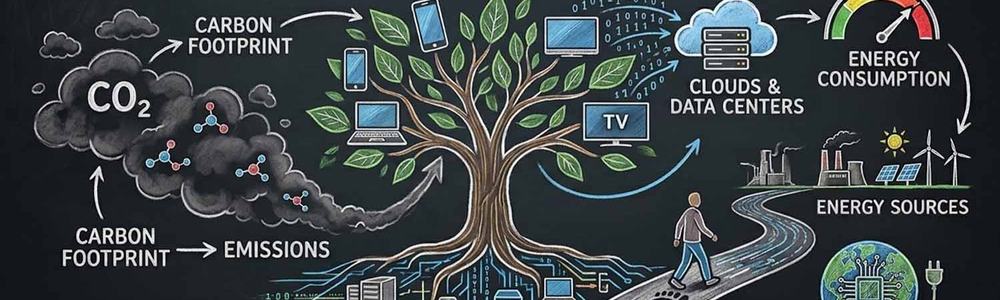
The Hidden Carbon Cost of Internet Traffic

A new method combines information from routers and public carbon intensity APIs to estimate network emissions at the level of individual traffic flows.
Categories: -

Internet Censorship in Iraq and Its Impact on Useful Content

The lack of standardized censorship methods is unintentionally affecting critical sectors in Iraq, including education, business infrastructure, research platforms, and public services.
Categories: -

Public Peering Remains Important in the Hyperscale Era

Despite massive investments by hyperscalers and CDNs into private backbone infrastructure, public Internet Exchanges (IXPs) remain a vital mechanism for traffic localization, reducing latency, and efficiently reaching local "eyeball" networks.
Categories: -

Why More Measurement Probes Don't Mean Better Internet Data

Measuring Internet quality does not necessarily require more measurement points but a greater understanding and reporting of anomalies.
Categories: -

Mobile vs Fixed Fiber Internet: Which is Most Sustainable

Can mobile networks replace fiber-optic broadband networks in a sustainable way, particularly in rural areas, where low population density makes fiber rollout particularly costly?
Categories: -

How War Restructured Iran’s Internet Into a Tiered and Monetized System

The Iranian case points to a broader shift in how digital connectivity may be governed amid geopolitical volatility.
Categories: -

How Resilient Are Government DNS Services?

Authoritative Domain Name System (DNS) infrastructure provides the definitive source of truth for all websites, including e-government services.
Categories: -

Is Your Internet Slower Because of the IP Version Your Connection Is Using?

Given that the Internet is a hybrid of IPv4, IPv6, and dual-stack (both IPv4 and IPv6) networks, it is important to understand performance in each IP version.
Categories: -

Anchors Aweigh, Networks Down: Tracking the Impact of Cable Cuts on Internet Resilience

Better visibility into submarine cable infrastructure could help operators detect outages faster, reroute traffic more efficiently.
Categories: