
Blog
-

Cost of Access: When the Internet Goes Dark, People Become the Network

On 23 July 2026, central Delhi became an unexpected experiment in communications resilience.
Categories: -

Do RPKI Updates Affect the Internet's Stability?

As RPKI adoption continues to grow, understanding its impact on BGP performance becomes increasingly important.
-
Measuring ccTLD Growth

Since 2019, eight ccTLDs have gained more than 1 million registrations, while one has lost more than 28 million.
Categories: -

Why IP Geolocation Can't Be Trusted for Mobile Networks and the Global South

Research shows that mobile network geolocation errors are more than 10 times worse than fixed broadband, with Africa and Asia seeing failure rates of 66–72% and 53–61% respectively, compared to under 20% in Europe.
Categories: -

Tracking Internet Shutdowns, 2019—2025
Between 2019 and 2025, Pulse recorded 916 Internet Shutdown events across 61 countries, spanning five continents.
Categories: -

When Networks Stay Up, But Services Disappear

Iran’s June 2025 Internet shutdown was not simply a national blackout: many networks remained visible in global routing data, while services inside them became unreachable from outside.
Categories: -

When the Lights Went Out: What the Iberian Blackout Taught Us About Internet Resilience

Study shows how traffic to core Internet infrastructure during the Iberian blackout dropped by up to 70%, but did not stop.
Categories: -

PeeringDB Shows that Automation Drives Network Interconnection Growth

Over the last decade, PeeringDB has shown that interconnection has become important to organizations whose networks don’t sell network services, such as enterprises and governments.
Categories: -
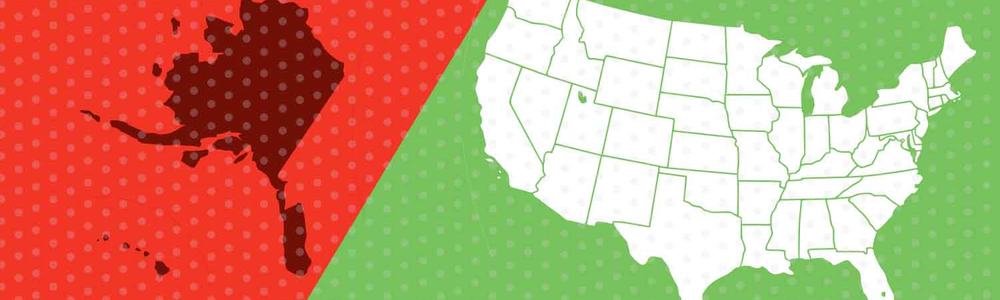
The 5G Digital Divide in the Non-Contiguous US is Real. Are LEO Satellites the Solution?

A new study shows a clear 5G digital divide between non-contiguous areas and the mainland US, mainly driven by spectrum and geography.
Categories: -

Less is More: Why SLIM Offers a More Resilient Internet

With websites getting bigger, many web services are becoming harder to access when networks are put under stress.
Categories: -
Measuring Data Center Growth
Since July 2020, 136 countries have registered new data centers in PeeringDB, 21 of which are the first in their country.
Categories: -
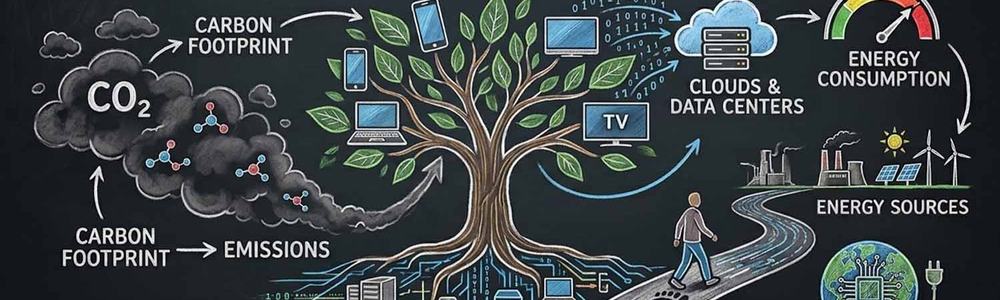
The Hidden Carbon Cost of Internet Traffic

A new method combines information from routers and public carbon intensity APIs to estimate network emissions at the level of individual traffic flows.
Categories: