

It's Exam Season in Sudan, and That Means Internet Shutdowns

Since 13 April, Cloudflare Radar has been recording a significant drop in traffic in Sudan between 13:45 and 17:15 local time.
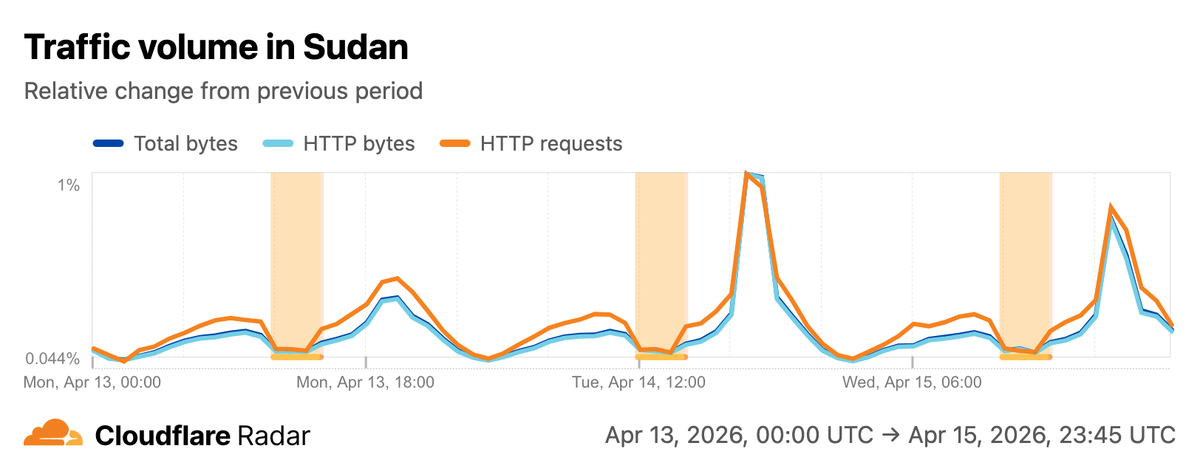
This drop corresponds with information shared by the local Internet Service Provider (ISP), MTN Sudan, on its Facebook Page, stating that it will suspend services during this time on days when the Sudanese Certificate Examinations are held, in accordance with government directives.
This is the sixth consecutive year that Pulse has tracked exam-related Internet shutdowns in Sudan, which has led the country to have the most Internet shutdown events in Africa since 2019.
Despite the efforts of the #NoExamShutdown campaign, suspending the Internet during national and regional exams has become the main reason for shutdowns that we have tracked globally since 2023, with Iraq, Sudan, Syria, and Algeria recording the most events.
Imposing Internet shutdowns during exam periods disrupts economic activity, blocks access to healthcare, hinders those studying for other exams or completing online studies, and impedes communication. They also violate fundamental rights and freedoms, including freedom of expression, access to information, and the right to participate in public life.
Does Starlink Offer a Solution?
An interesting subtext of the current shutdown emerges when we look more closely at Cloudflare traffic on individual networks operating in Sudan (Figure 2). We can see that all traffic from local ISPs has dropped, but traffic to SpaceX Starlink (AS 14593, dark blue line) is still continuing.
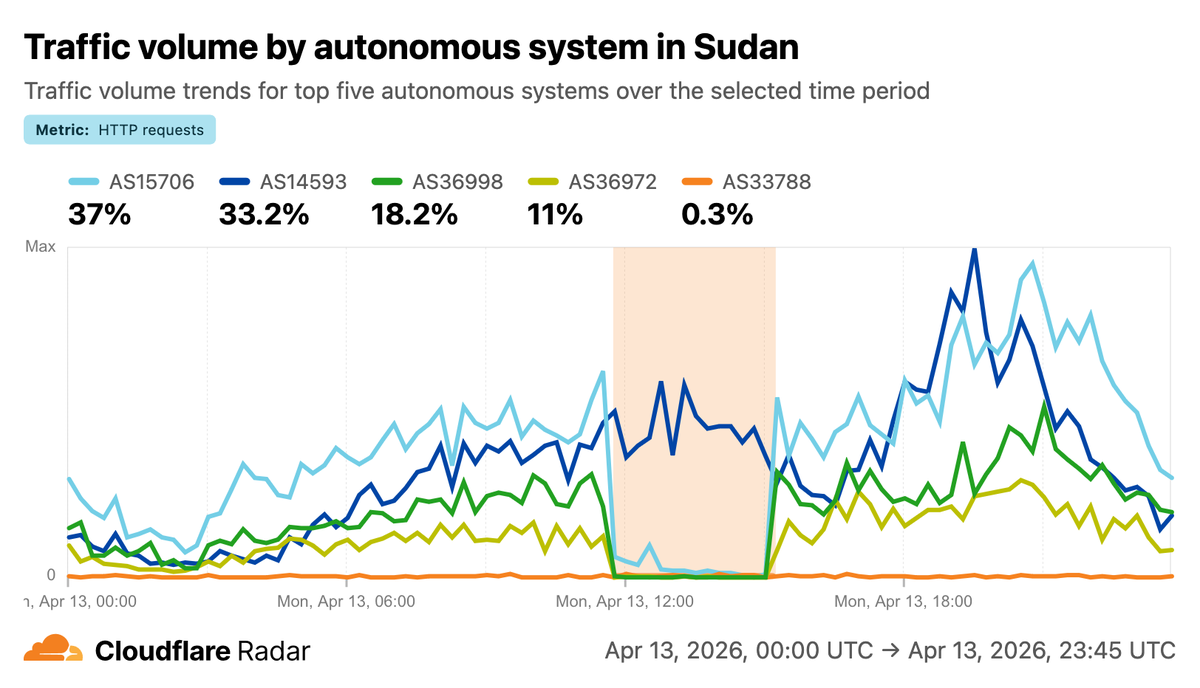
According to the Pulse Country Report for Sudan, Starlink is currently the second-largest ISP in Sudan by market share and has grown exponentially over the last 12 months. All this despite it not being legally available in the country.
This market disruption by Starlink is also trending in other African countries. Since April 2025, Starlink use has increased from 18 to 32 African countries, with greatest gains seen in Niger (2% of market share in April 2025 to 38% in March 2026), Chad (0 to 37%), the Central African Republic (0 to 31%), Guinea-Bissau (0 to 28%), and Sudan (0 to 27%).
Of the 32 countries where Starlink has recorded at least 1% market share, 20 have experienced at least one Internet shutdown since 2019.
We will be watching this space to see how communities that continually suffer from artificial Internet disruptions and unintentional outages turn to Starlink and other LEO-satellite Internet services, and the effect it will have on market dynamics and overall Internet resilience.