

18 Years Later, IPv6 Reaches Majority

Since 2012, Google has published a regularly updated graph showing the percentage of users accessing its services via Internet Protocol version 6 (IPv6).
That graph shows data since 2008, when users accessing Google over IPv6 were predominantly using transition technologies (6to4 and Teredo). Access via native IPv6 exceeded the use of transition tools in 2010, and their use dwindled to nothing shortly thereafter.
Now, 18 years since Google started recording this data, access via native IPv6 has for the first time exceeded 50% (50.10% on 28 March 2026, to be precise).
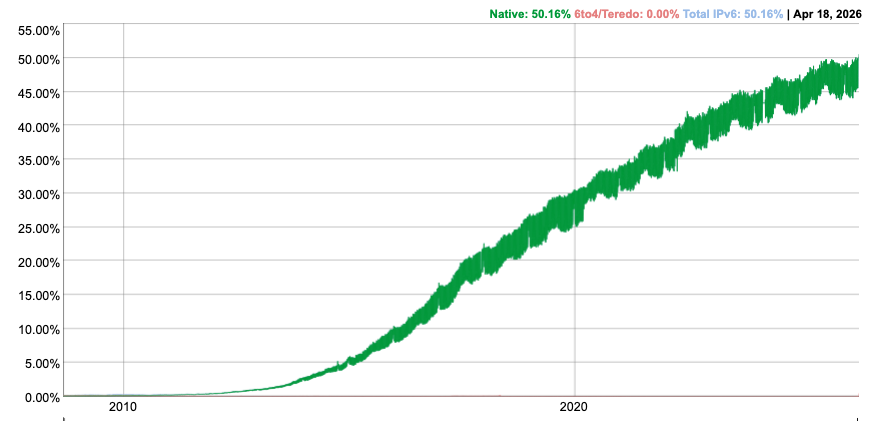
This is a significant milestone in the very long road to more widespread IPv6 deployment. Access over IPv6 came tantalizingly close to passing the 50% mark a year ago (49.56% on 21 June 2025), but has bumped along below 50% over the last several months.
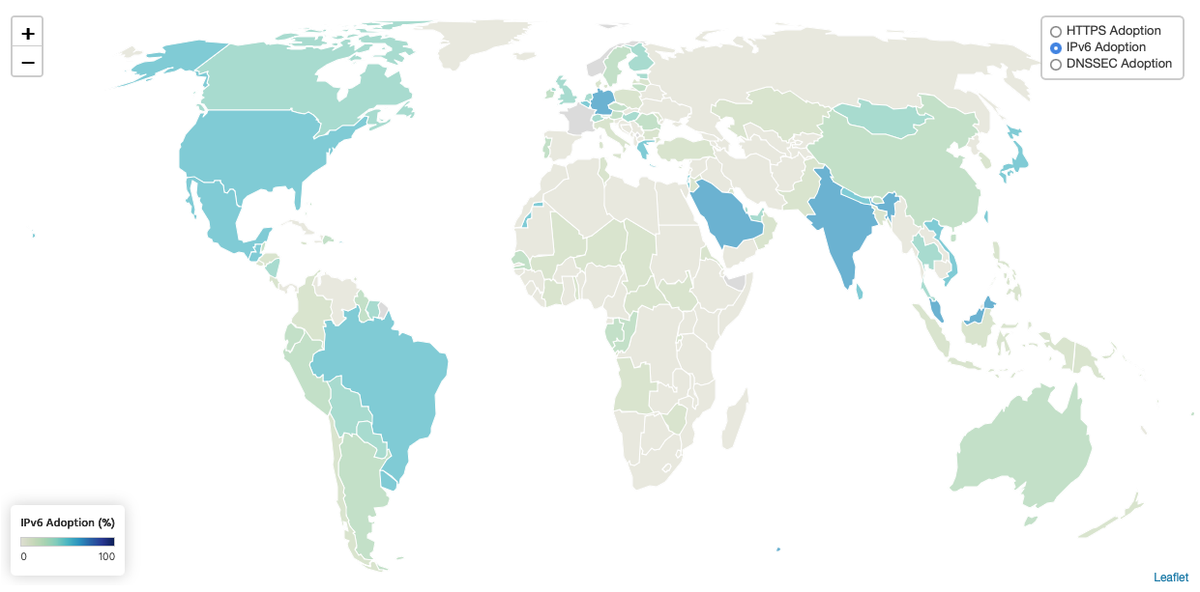
Of course, this is the aggregated figure for all Google access. If we consider specific countries, IPv6 deployment levels vary widely from leaders like France (73%), India (72%), and Saudi Arabia (65%) to laggards like Italy (17%), Spain (10%), Egypt (4%), and most African and Central Asian countries.
Internet Society Pulse tracks IPv6 deployment data from several sources; our average across all of them is currently 43% (Figure 3). Another milestone to look forward to in the coming years is when all of our sources of IPv6 deployment data show a majority for IPv6. I wouldn't like to predict when that will be!
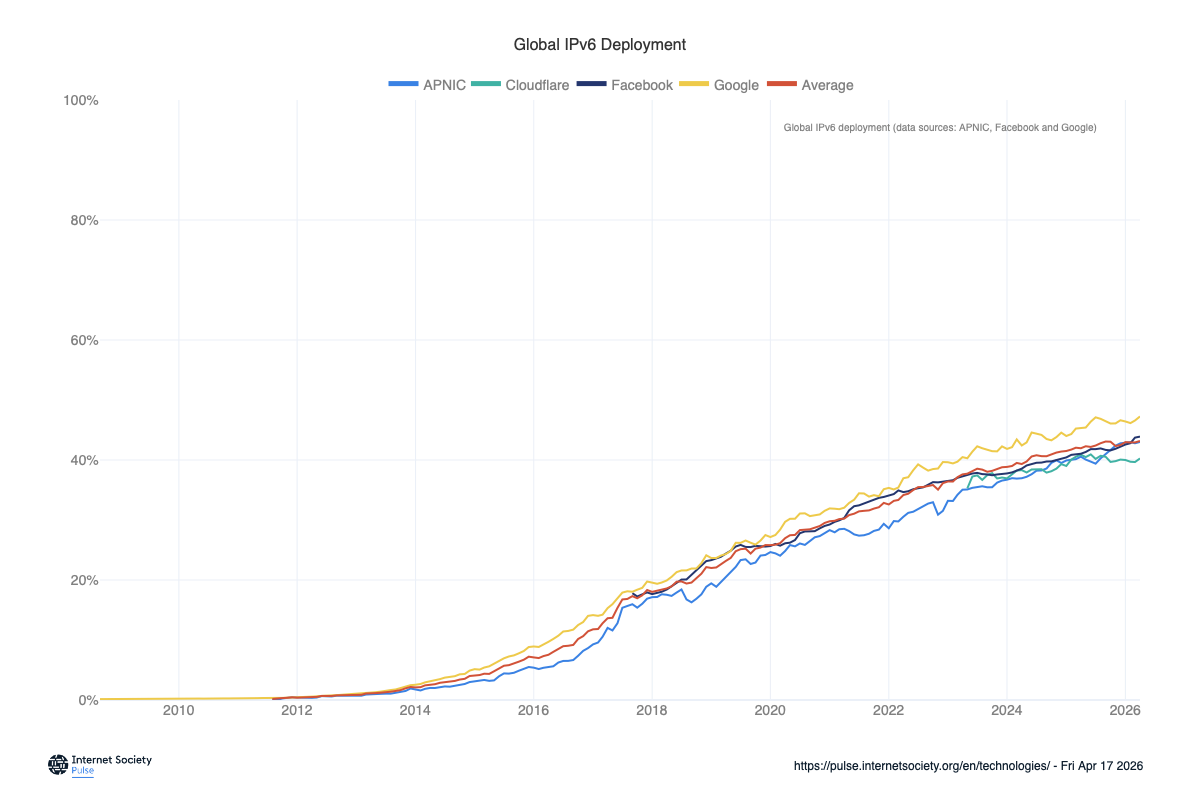
Photo by rc.xyz NFT gallery on Unsplash