
Nepal Internet Disrupted Amidst Protests

Nepal's Internet users are experiencing disrupted Internet connectivity and access to web services following the Ministry for Communication and Information Technology's orders to the Nepal Telecommunication Authority last week to make unregistered social media sites inactive until they are registered in Nepal under the Social Media Directives 2080.
First reports of disruptions came to light on Thursday, 4 September, following the midnight deadline. The orders were reportedly given in a bid by the government to tackle misinformation, fraud, and hate speech. Facebook, Facebook Messenger, Instagram, Reddit, WhatsApp, X, and YouTube were among a list of 26 services asked to register.
See the Pulse Internet Shutdown Tracker
Protestors took to the streets of Kathmandu on Monday, 8 September, to voice their opposition to the bans and anger towards the government over "corruption and a weak economy." The resulting unrest and letters of petition from the community led the Ministry to reneg on its orders on Tuesday, 9 September.
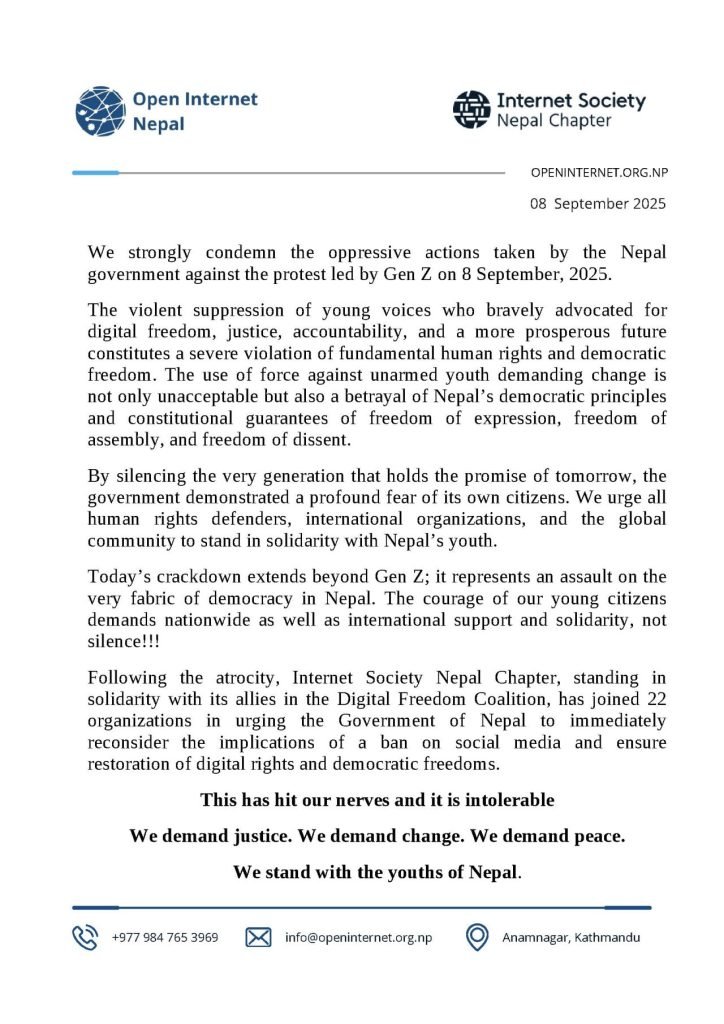
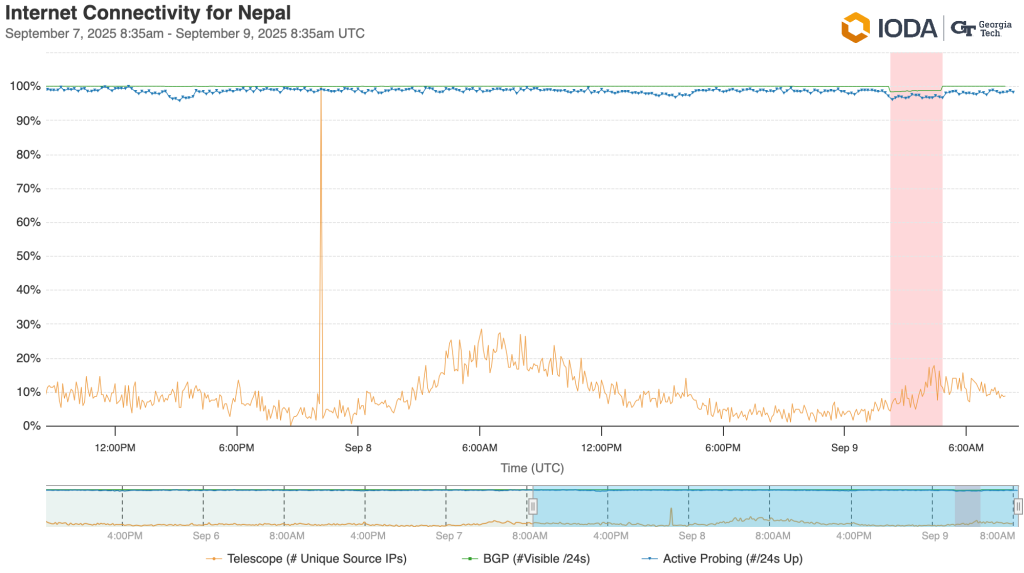
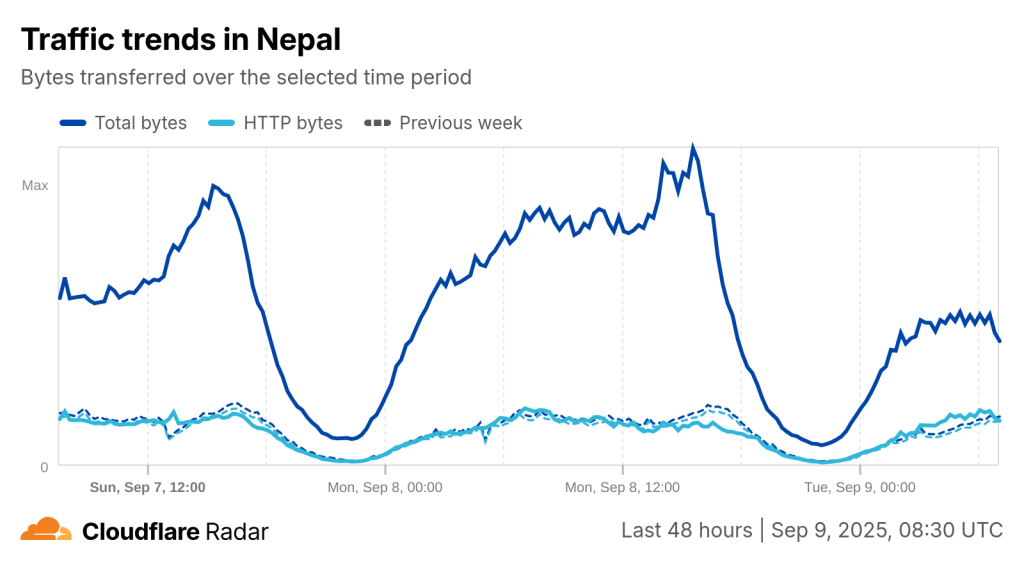
However, Pulse has been informed by local contacts that Internet connectivity has been disrupted. IODA and Cloudflare Radar data (below) show slight to moderate disruptions to Internet connectivity and Cloudflare traffic in Nepal.
Google Transparency Report is also showing a drop in Google search traffic, but it does show YouTube traffic returning.
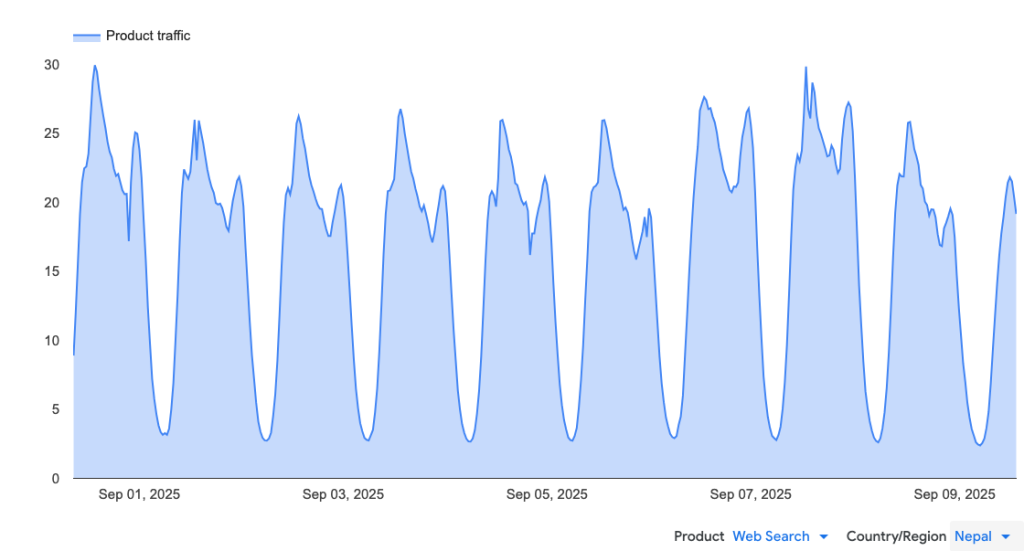
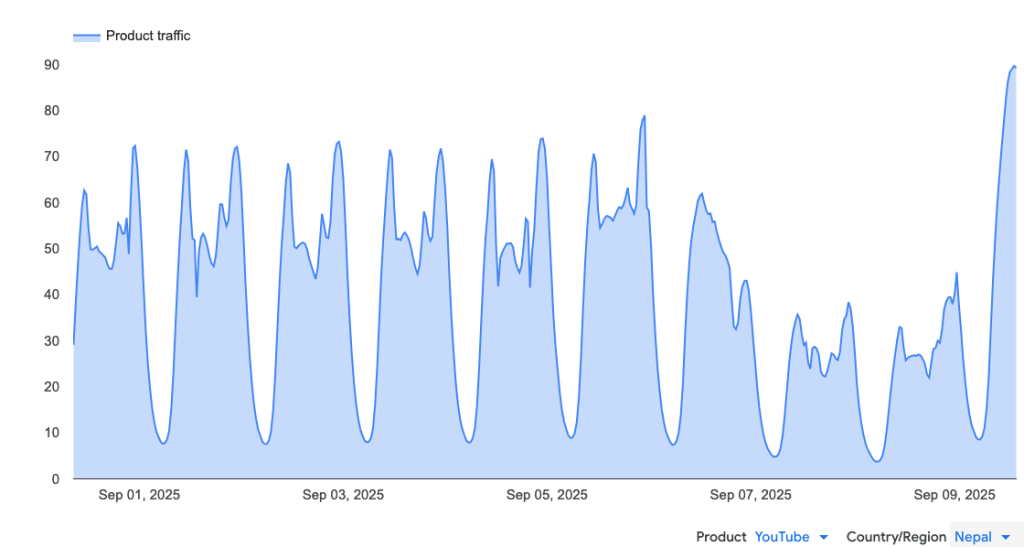
To be clear, we cannot verify whether these recent connectivity disruptions are due to actions of the Nepal government, or due to network outages, or excessive traffic. (Read more: BBC Live)
Internet shutdowns have far-reaching technical, economic, and human rights impacts. They undermine users’ trust in the Internet, setting in motion a whole range of consequences for the local economy, the reliability of critical online government services, and even for the reputation of the country itself. Policymakers need to consider these costs alongside security imperatives.