
Anchors Aweigh, Networks Down: Tracking the Impact of Cable Cuts on Internet Resilience

Have you ever noticed that your video calls with friends in another country sometimes feel crystal clear while at other times they are frustratingly laggy? This could happen for many reasons, from network congestion to routing decisions made deep within the Internet.
In some cases, your data may even travel through different submarine cables— a massive network of fiber-optic cables quietly carrying nearly all international Internet traffic.
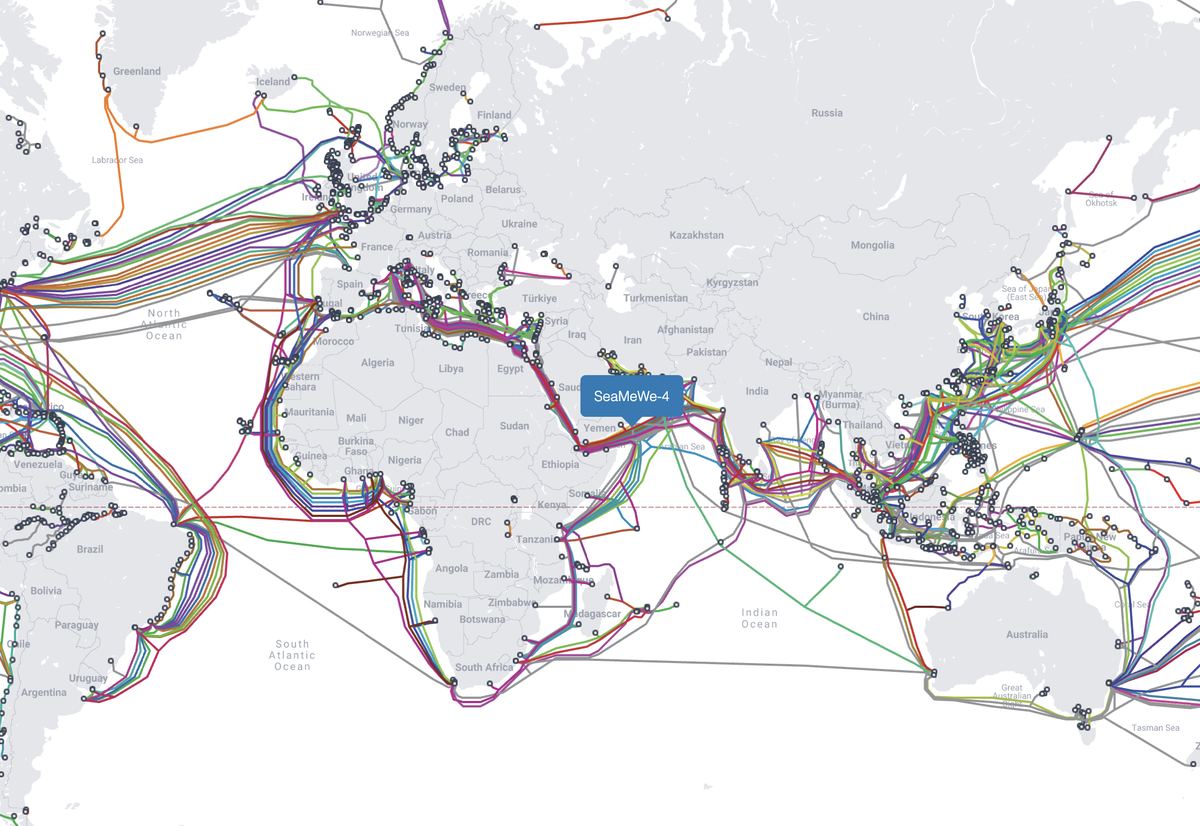
Despite their importance in the reliability and resilience of the Internet in our everyday lives, submarine cables remain largely invisible to most people. Public attention usually turns to them only when something goes wrong. This hidden nature makes it difficult to understand what happens inside these global communication pathways during disruptions.
In September 2025, users across parts of Asia and the Middle East experienced slowdowns in cloud services and Internet connectivity. Microsoft later confirmed that the issue was linked to submarine cable cuts in the Red Sea.
Reports linked these disruptions to major cable systems such as SMW4 (South East Asia–Middle East–Western Europe 4) and IMEWE (India–Middle East–Western Europe), both of which carry large volumes of traffic between Asia, the Middle East, and Europe.
Because these cables pass through the same geographic region near the Red Sea, damage in a single location affected connectivity across multiple countries. For millions of users, these disruptions did not look like a cable problem beneath the ocean. They appeared as slow video calls, unstable cloud applications, delayed payments, and buffering screens.
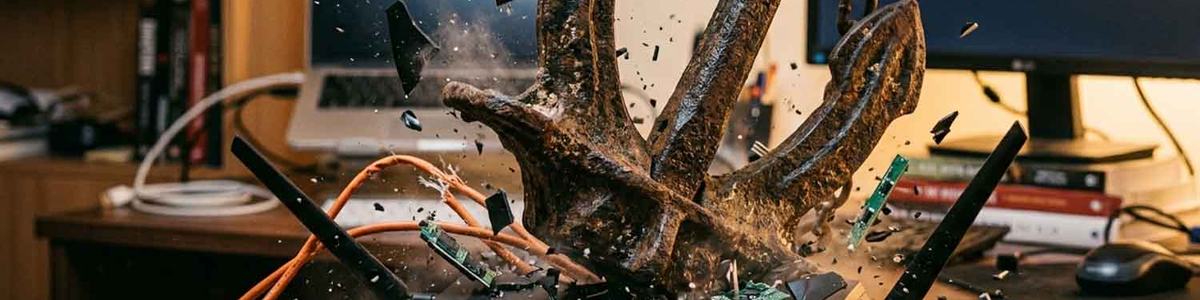
Similar incidents have occurred in other parts of the world due to ship anchors, fishing activity, earthquakes, and accidental cable cuts. Events like these highlight how heavily the modern Internet depends on undersea cables that most people never see.
Understanding How Internet Traffic Flows is Like Solving a Maze
Internet routing is highly dynamic: Even two people sitting in the same living room, opening the same website at the same time, may have their traffic routed through entirely different international paths. This makes identifying failures and estimating their impact surprisingly difficult.
The challenge becomes even harder because many submarine cables follow similar geographic routes. On paper, these cables may appear geographically diverse, but they may still depend on shared physical infrastructure. As a result, a single disruption may affect multiple cable systems simultaneously.
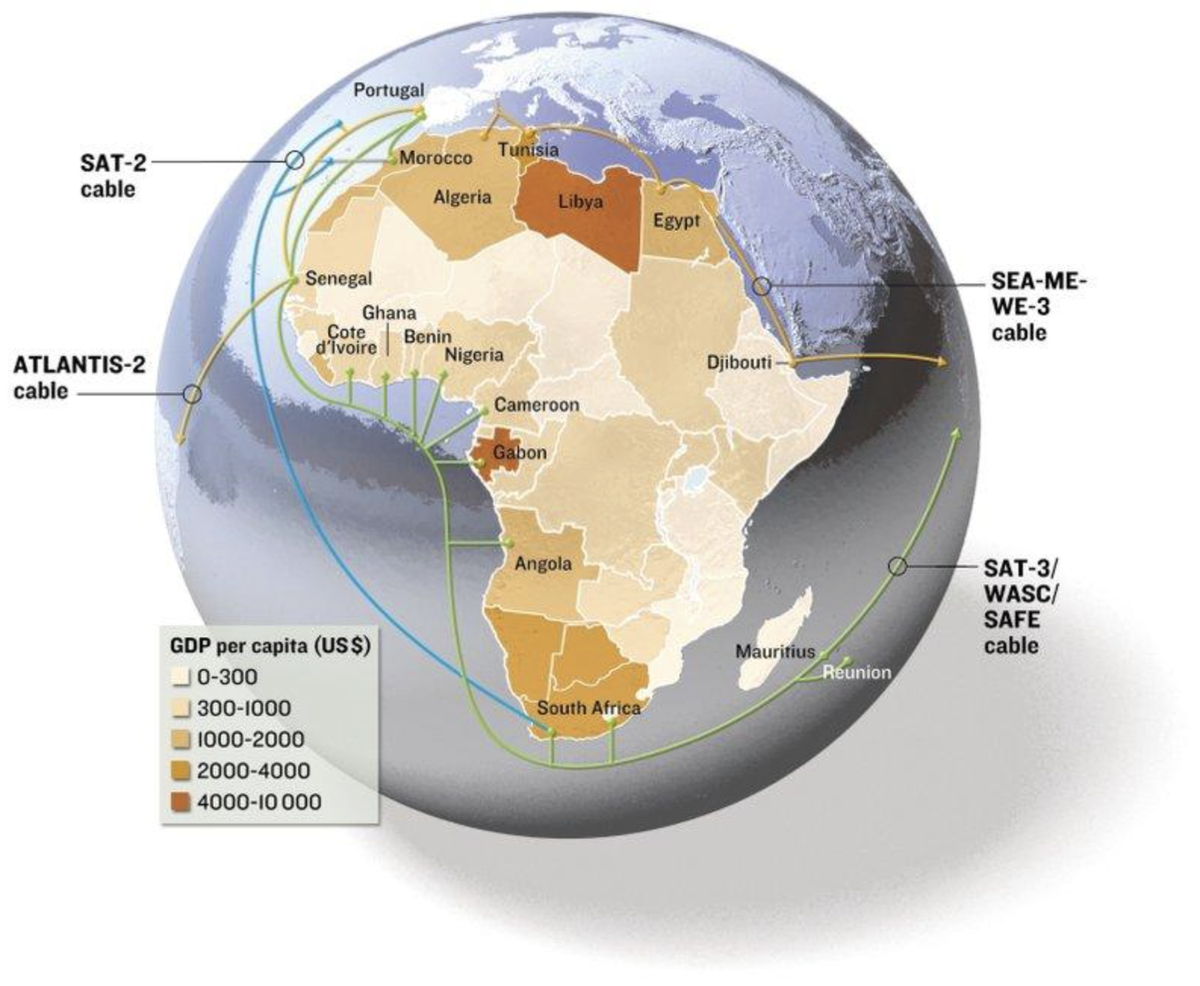
Better visibility into submarine cable infrastructure could help operators detect outages faster, reroute traffic more efficiently, and design stronger international connectivity systems. It could also help policymakers identify critical vulnerabilities and where additional redundancy may be needed.
Today, traditional Internet measurement tools can estimate delays between network points, but they often cannot directly determine which physical submarine cable carries the traffic. This creates major challenges for detecting failures, understanding hidden infrastructure dependencies, and improving resilience planning.
Motivated by these limitations, my 2025 Pulse Research Fellowship seeks to improve the visibility into submarine cable mapping and Internet resilience. We are exploring how large-scale Internet measurements can be used to better understand these hidden paths and improve visibility into global cable infrastructure. By studying patterns in network behavior across regions and cable systems, we aim to better understand how traffic flows during events such as outages, congestion, and routing changes.
In a future post, we will share more about our findings and what they reveal about the resilience of the modern Internet.
Riya Ponraj is a PhD student in computer science at the University of Oregon and a 2025 Pulse Research Fellow. Her research lies at the intersection of network measurement, Internet infrastructure, and machine learning.
The views expressed by the authors of this blog post are their own and do not necessarily reflect the views of the Internet Society.