

Assessing Early Adoption of LEO Satellite Systems in Remote Indigenous Communities in Northern Canada

In short
- Low-Earth Orbital (LEO) Internet satellite services help address first-level (access, affordability, reliability) and third-level (social and economic outcomes) digital divides.
- While LEO satellite services are promising, they result in trade-offs for end users and rural/remote communities.
- Locally-driven research and programming are necessary to ensure that rural/remote communities can fully participate in the digital age while safeguarding their well-being and cultural heritage.
In recent years, digital divide research has explored how patterns of social inclusion and exclusion emerge alongside increasing levels of Internet access, adoption, skills, and use. While we recognize the importance of the turn to strengths-based digital inclusion initiatives, we note that fewer studies discuss the adverse impacts accompanying rapid Internet adoption.
Scholars are identifying how digital inclusion interventions may inadvertently introduce new forms of discrimination and marginalization. For example, Richard Heeks’ concept of adverse digital incorporation suggests that increased connectivity can provide a means for more-advantaged groups to extract disproportionate value from the work or resources of less-advantaged groups, thereby threatening new forms of exploitation.
These debates are emerging as newly launched Low-Earth Orbital (LEO) satellite Internet services quickly come online, offering a means for previously unserved and underserved regions and communities to connect. However, communities and end users are also raising concerns about the potentially negative implications of this sudden arrival of unlimited, high-speed Internet access. These tensions illustrate how the rapid deployment and adoption of LEO systems offer new opportunities — and challenges — to understandings of digital inclusion often focused on addressing first- and second-level digital divides. They also highlight the essential role of community researchers in interpreting and validating on-the-ground understandings of rapid digital adoption.
The Evolving Digital Divide in Remote Communities
In this context, my colleagues and I at the University of Alberta, the Native Women's Association of the Northwest Territories (NWT), and Katlotech Communications Ltd have been investigating the experiences of Indigenous residents of small-population, fly-in communities located in the Western Arctic region of Denendeh and Inuvialuit Nunangat.
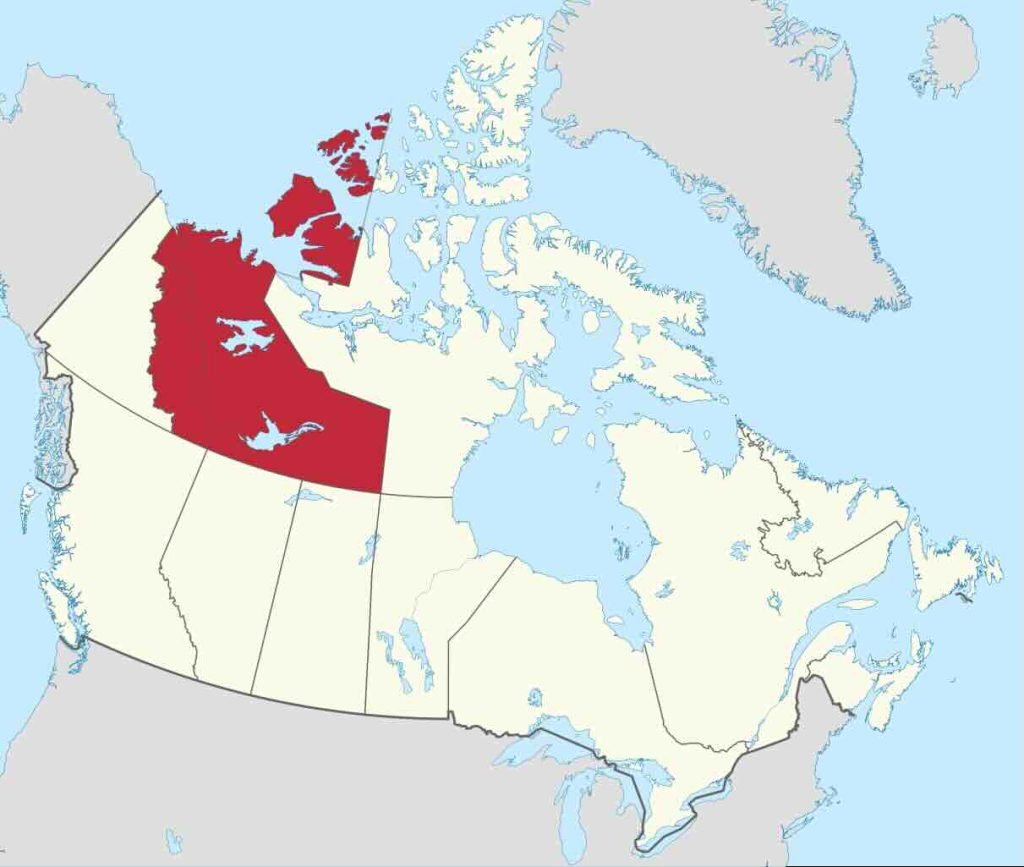
The diverse Indigenous Peoples living in this region engage in artistic and cultural activities, and many continue to speak their ancestral languages. In addition to seasonal land-based activities, they work in community radio stations and co-op stores, in resource industries, and in various public and government services.
With respect to Internet infrastructure, some communities are connected to terrestrial infrastructure (fixed wireless or fibre optic), while others remain dependent on satellites, which, until recently, were expensive, slow, unreliable, and subject to data caps. The recent availability of LEO systems disrupted years of reliance on a single incumbent service provider. This situation helps us learn how people experience the outcomes of rapid Internet adoption and use.
Our baseline research found that LEO (Starlink) users in two fly-in communities demonstrated a greater propensity to access online public services compared to those who subscribed to the incumbent (see Figure 2). Starlink users also reported more engagement in online business activities, including e-commerce and remote work. However, we also learned that having a higher-quality Internet connection is not always beneficial, as Starlink users reported they now experience increased access to anti-social content and problematic online behaviours.
Figure 2 — Distribution of access methods to public services by Starlink and Non-Starlink users.
These observations led to a second study with a fly-in Indigenous community that compares baseline with follow-up surveys conducted one year after LEO Internet services became available.
Our findings illustrate several emerging tensions. While LEO systems seem to have resolved many technical and access issues, respondents also report increasing online harms. Compared to baseline, they indicated much higher awareness of and concerns over cyberbullying, online scams, and risks to youth. They also indicated ambivalence between the positive and negative effects of the Internet on cultural practices, and indicated stronger feelings that the Internet controls too much of our world today.
Finally, after one year, respondents are less likely to view and use Internet services to access public services. Fewer people indicated they are using the Internet for education or health care, and a high number stated that they are unlikely to use online health care services. Conversely, more people are going online to access entertainment and to socialize. Many local youth stressed that improved connectivity provides them opportunities to communicate, and see online platforms as spaces where culture, spirituality, humor, and relationships are expressed.
Digital Inclusion Powered by the Community
Overall, the data indicate that many people retain a predominantly positive outlook on the Internet. However, people are also expressing more concerns and lowered expectations regarding online public services and economic activities.
These findings underscore the need for comprehensive, community-engaged digital inclusion programs to accompany the deployment of LEO Internet services. Focusing on digital divides may not tell us how individuals actually use the Internet or what the outcomes of such use may be. Locally driven research and programming are necessary to ensure that communities can fully participate in the digital age while safeguarding their well-being and cultural heritage.
Rob McMahon is an Associate Professor in Media & Technology Studies and Political Science at the University of Alberta.
Contributors: Oluwatoyin Ogunbela, Michaela David, Brenda Norris, and Katłı̨̀ą (Catherine) Lafferty.
The views expressed by the authors of this blog are their own and do not necessarily reflect the views of the Internet Society.
Photo by Peter Prokosch/GRID-Arendal via Flickr