
25 Cable Cuts a Day! Data and Collaboration Key to Strengthening Nigeria’s Internet Resilience

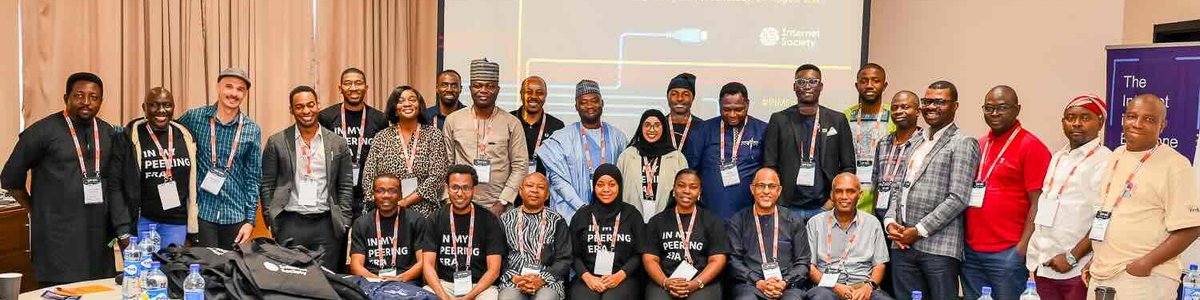
As Africa's most populous country and West Africa's largest economy, Nigeria is positioning itself as an ICT leader in the region. Last week, the Internet Society held two Pulse Internet Measurement Forum events in its capital, Lagos, during the African Peering and Interconnection Forum, to discuss the challenges and opportunities to improve the country's and region's Internet resilience.
Around 40 participants shared valuable insights from the public, private, and civil society sectors in Nigeria and other regions of Africa. However, one insight that stuck with me most was the recently reported figure of 13,700 fibre cable cuts that the country's largest Internet Service Provider, MTN Nigeria, had to deal with between January 2024 and June 2025—the equivalent of 25 per day!
According to MTN, this cost the company around USD 11.4M in 2024, with sabotage and road construction accounting for 69% of cuts.
These figures underlie the importance of data as a critical advocacy and decision-making tool, primarily because they are easily measurable and can be used as a baseline to track the impact of future activities that seek to curb cable cuts. Making the data public (and continuing to do so) is equally important in these efforts, as it encourages collaboration to address the issue.
Based on the workshops' discussions, this collaboration is paramount to understanding the underlying context that is holding back Internet development in their respective countries and regions.
Lightening the Load to Spread the Risk
With over 60% of market share in Nigeria, MTN has done an admirable job connecting most of Nigeria's 80 million Internet users, predominantly via mobile broadband. It is also contributing heavily towards helping the government meet its ambitious target of 70% fixed broadband penetration by the end of 2025—a figure predicted to fall well short and with good reason when cable operators like MTN are having to not only install cable but also attend to up to 25 cable cuts a day.
However, this market dominance has impeded competition and the benefits of more resources to accelerate innovation and development. It has also impacted the country's Internet performance, which ranks 84th and 127th globally for mobile and fixed broadband per Ookla's July 2025 Speedtest Global Index.
Performance aside, having such a concentrated market also impedes competitive pricing but most importantly increases the range of customers impacted 'when' MTN experiences outages from the multiple cable cuts it experiences, not to mention any misconfigurations or malicious attacks on it or its upstream providers. The point is that a diverse market reduces the impact of any outage.
Nigeria's 'Very poor' market competition profile is similar to nearly 50% of other countries globally. That's not to say that it can't be improved, and quickly, as we recently highlighted in Iraq, Myanmar, and Venezuela, all of which have gone from Poor to Good or Fair to Very Good ratings in two years.
Figure 1 — Nearly 50% of countries worldwide have 'Very Poor' ISP market competition ratings, per the Pulse Country Reports.
Understanding how these and other countries have diversified their markets requires context, which is where we need to return to the need to collaborate.
Validation Through Collaboration
Having participants with a wide range of experience at our workshops helped draw out many unique explanations for the Internet resilience challenges that Nigeria and other countries in Africa face, and the opportunities they can capitalise on with greater awareness and resourcing.
Several participants pointed to the need to form a dialogue with local communities around use cases and how the Internet can support their community, whether it's access to e-commerce, e-government services, education, or telehealth. Others also noted how community-centered connectivity options can empower some communities to deploy and maintain local networks.
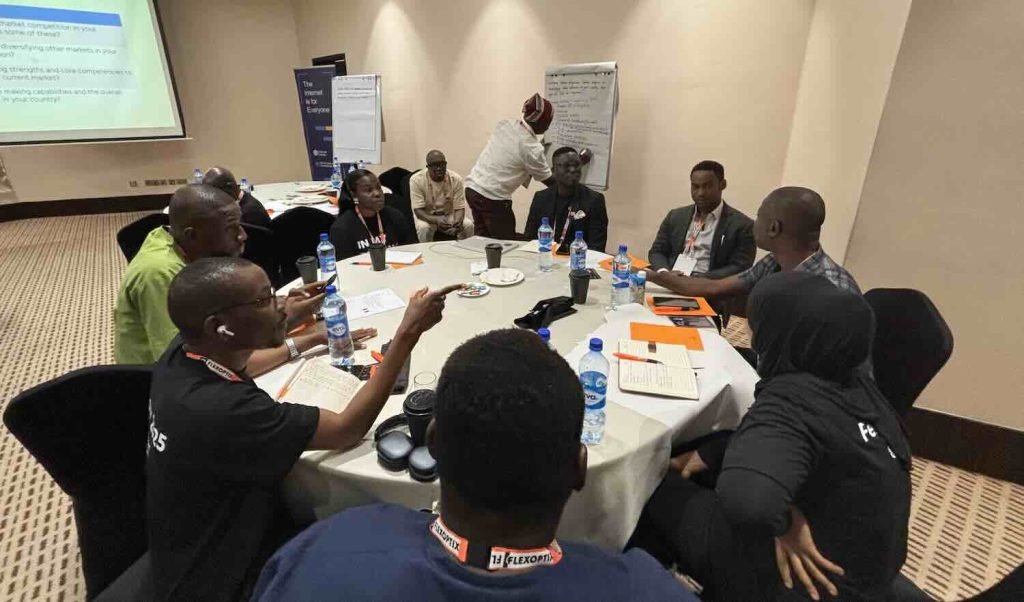
One participant noted that the term 'maintenance' isn't a concept that many communities and companies comprehend or even have a word for. They reasoned that this is one of the primary reasons why infrastructure is limited and experiences so many deliberate or accidental impacts.
A final discussion point worth raising is the need for standards. Returning to the country's cable cut issue, MTN's Chief Technical Officer (CTO) Yahaya Ibrahim was recently quoted as saying that before MTN lays fibre cables, it "usually get authorisation from the government concern, and we ensure that Right of Way (RoW) is respected. After laying them, we take the maps to them so they know the locations of these cables."
The Open Fibre Data Standard seeks to ensure that these 'maps' are created using standard methods that other infrastructure sectors are using, so that there is less risk of having to repair or reroute fibre optic cables due to future development.
This is to say that Internet resilience requires taking a holistic perspective—using data and collaborative context—of the physical Internet infrastructure, the industry that oversees it, and the industry and communities that rely on it and seek to accept and grow it.
Email us at [email protected] if you're interested in hosting, partnering, sponsoring, or presenting at any future Pulse Internet Measurement Forums.