
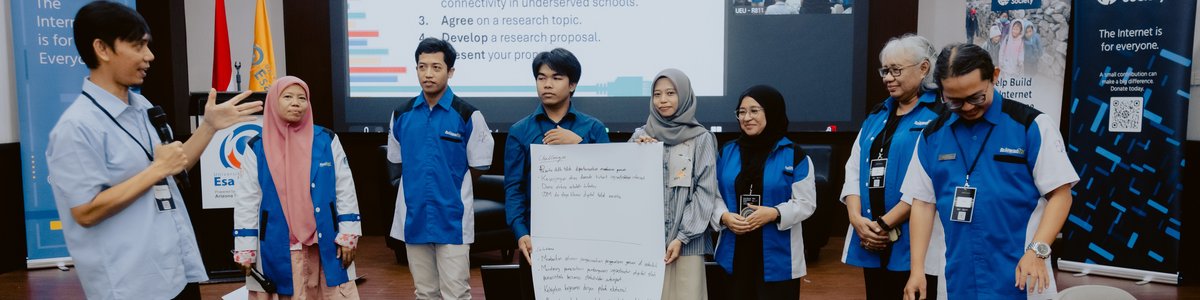
Recapping PIMF Indonesia: Measuring School Internet Connectivity

Last month, we held our first Pulse Internet Measurement Forum (PIMF) for 2026 in Jakarta, Indonesia.
This was the first PIMF event we co-organised with a local chapter, Internet Society Indonesia Jakarta, and the first thematic event we held, focused on the chapter's suggestion: Measuring the resilience of school Internet connectivity. Both of these firsts will be features of our PIMF series this year (more on that later).
Setting a Theme
Indonesia’s 69% Internet penetration rate (per the ITU) ranks fifth among the ten most populous nations globally, up from 31% in 2017.
This growth seems quite an achievement, given that its 283 million people span across more than 900 permanently inhabited islands. However, outside the urban areas of its major islands—Java and Sumatra, which account for three-quarters of the population and both have an Internet penetration rate of more than 77%—the challenge of connecting the remaining 31% becomes apparent.
Building off her community-centered connectivity research and advocacy work during the 2025 Internet Society Community Fellowship and the Chapter's recent series of digital literacy workshops across five underserved schools in and around Jakarta, Chapter Chairwoman Andriyanti Asianto requested this focused PIMF event to help the Chapter and its partners recognize and validate the challenges of school Internet connectivity in rural areas.
Tapping into International, Regional, and Global Initiatives…
A key focus of our PIMF series is to highlight the work and connect people with the projects and teams that are measuring and developing the Internet.
Given the event's focus and its alignment with APRICOT 2026, which was taking place in Jakarta during the same week, we were able to secure several research partners to speak at the event, including:
- Lia Hestina, who shared how participants can use RIPE Atlas to measure Internet performance in Indonesia, and how they could use it for schools.
- Pavlos Sermpezis, who gave an overview of Measurement Lab’s Internet Quality Barometer.
- Tariq Zaman from the University of Technology Sarawak, who discussed his team’s lessons from measuring Internet performance in rural Borneo.
- Maria Antonia Bravo Reyes, who discussed the challenges in Internet measurement and quality assessment that the Giga UNICEF project has learned from and is working to address with its local partners.
- Aftab Siddiqui, who spoke about the APNIC Foundation’s current project to enable reliable Internet access for 100 schools and healthcare facilities across the Asia Pacific region.
See the PIMF Indonesia event page for their slides and recordings of their presentations.
To Inspire Local Solutions…
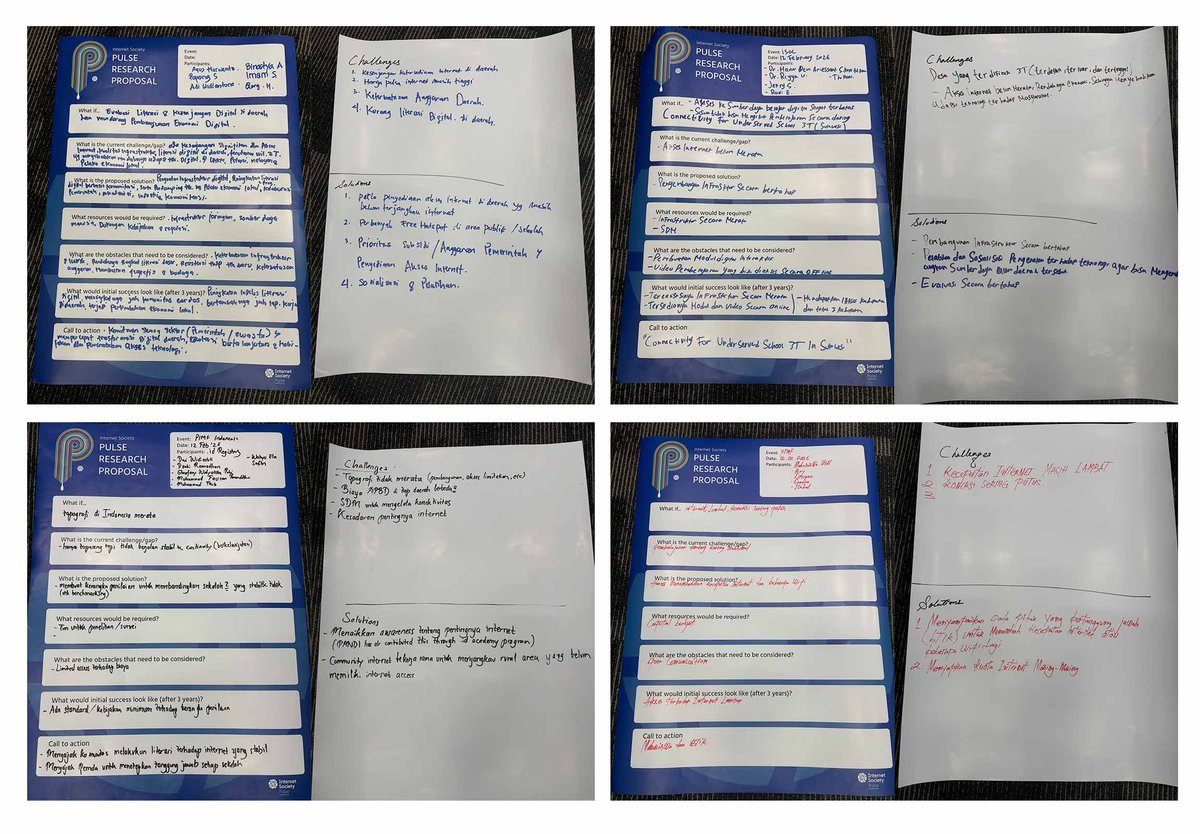
Armed with this context, we asked participants to work in groups to identify the challenges of connecting people in Indonesia and to propose a solution with measurable components to track the impact of their strategy.
| Challenges | Solutions |
|---|---|
|
- Digital literacy is uneven - There is a gap between the urban and regional Internet infrastructure - The cost of the Internet is high for regional areas - Topography and geography make it hard to connect many rural areas - Awareness of and use cases for the Internet are lacking |
- Collaborate more with the government, NGOs, investors, and private companies on policy, literacy campaigns, and development - Develop offline digital literacy and e-learning resources - Create an assessment framework to compare schools with stable and non-stable Internet connectivity |
And Inform Future Research and Development
This exercise aims to blend international and local expertise to identify gaps and overlaps, as well as get people to critically think about viable, measurable solutions and how to achieve them.
Our plan is to run this exercise at PIMF and other Internet Society events during 2026, and to collate and analyse the responses during our Pulse Research Week later in the year, alongside our research and data partners, in an effort to tailor our work to regional needs and identify local partners to help with our efforts.
Email us at [email protected] if you’re interested in hosting, partnering, sponsoring, or presenting opportunities at our future PIMF events. And stay tuned to the Pulse events page for upcoming events.