
Mapping the Impact of Shutdowns on Internet Exchange Points

In short:
- Internet Exchange Points offer a unique vantage point for studying the impact of Internet shutdown and outage events at a country and regional level.
- Pulse research mapped the network topology of an IXP and simulated an outage to understand the impact it would have on its connected networks and routes.
- IXPs should review the resilience of their role in their local network to prepare for partial or widespread outages.
The frequency of Internet shutdowns and outages is always increasing. Internet Exchange Points (IXPs) provide a unique vantage point for studying the impact of these events at a country and regional level. Such impacts can range from an increase in overall latency when accessing an Internet page to a complete disconnection from the Internet.
As part of my recent 2025 Pulse Research Fellowship, I explored various methodologies to map the network topology of an IXP ( IX.br São Paolo) and simulated the impact on regional networks when the IXP goes down.
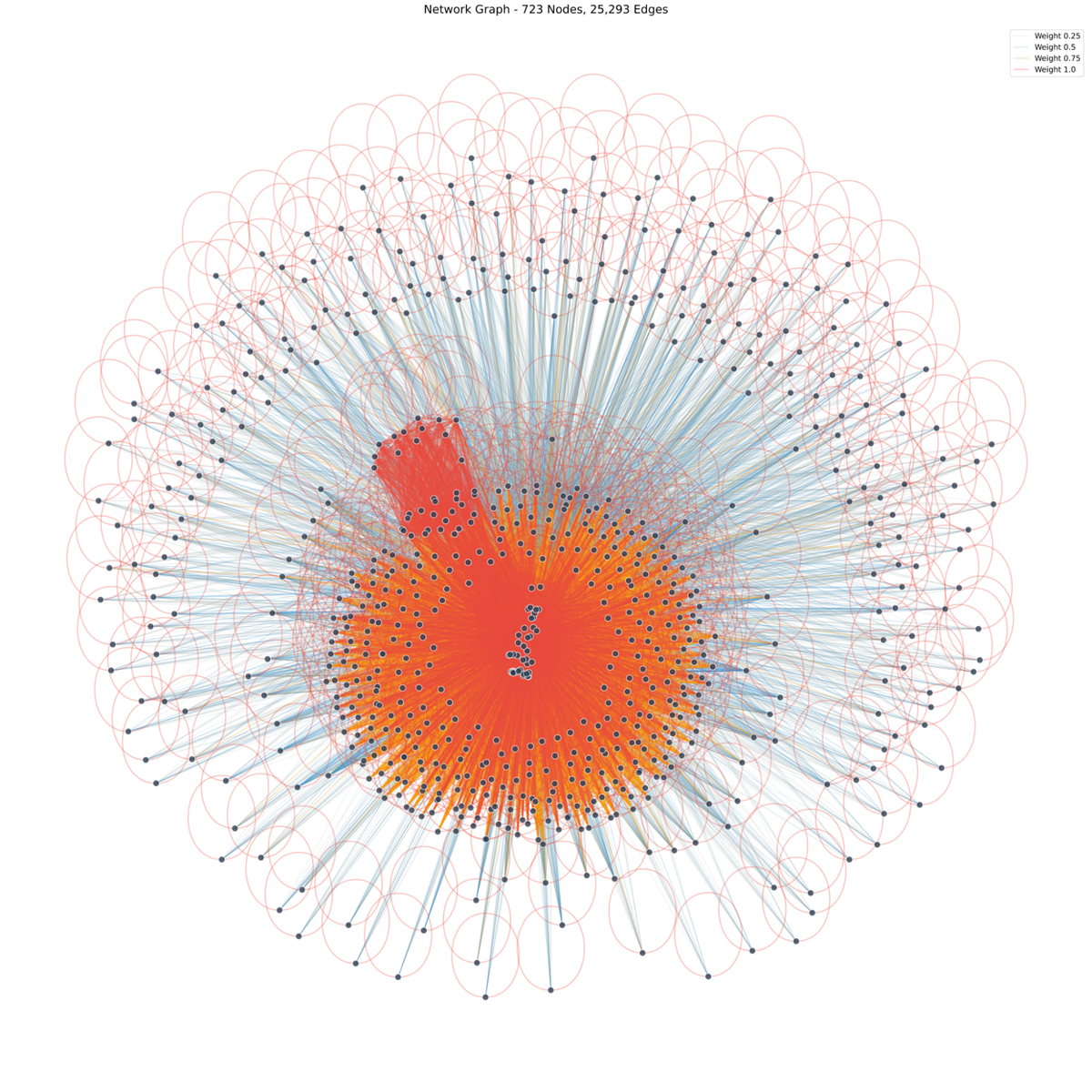
Figure 1 shows 30% of the IXP network topology I discovered through active probing (while we discovered a much larger topology, it is not prudent to display it due to scale). The total topology discovered included ~ 847,000 links, which is 795 times as many as those discovered from using traceroutes.
This figure accounts for only ~14.45% of the total number of links (> 5 million), with the rest of the topology lacking information. This lack of visibility suggests a need for greater data transparency, which is essential for monitoring and predicting latency and connection changes for end users.
We also measured the path increase between a non-link (a confirmed case where a link doesn’t exist) and a probable non-link.
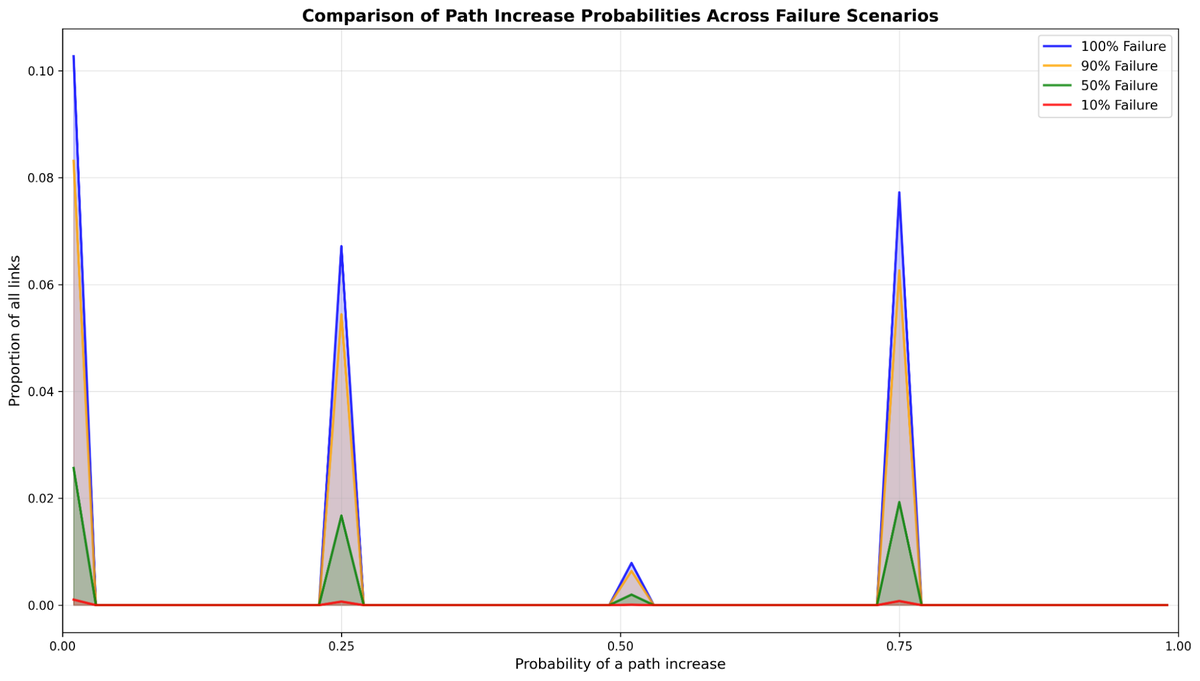
Figure 2 shows that:
- 10% of all the links have no shorter alternative paths
- ~15% of the links can experience increased path lengths in the event of an IXP failure.
Finally, we also identified two IXPs in the same location as IX.br Sao Paolo—DECIX Sao Paolo and Equinix Sao Paolo— which share 13,110 links. If these links are disrupted, it cascades to the nearby IXPs. Figure 3 shows that in the worst-case scenario of a full load of traffic, these IXPs would not be well-equipped to handle this extra traffic. This is shown in the following graph.
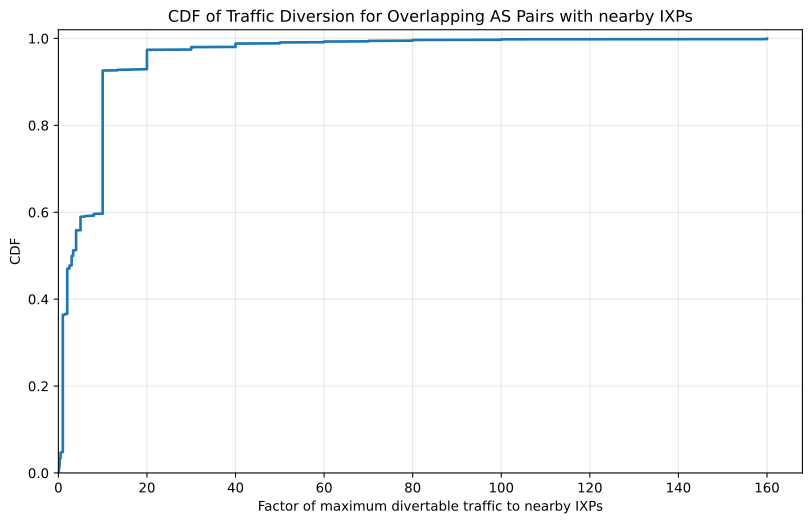
While on average the overhead on the diversion of traffic, which represents the data capacity of the current link over the new link, is not more than 10 times, there are cases where this is over 100 times.
This highlights a need for better fallback mechanics in case of partial and full failure.
In summary, our results show that while a IX.br Sao Paolo at majority is robust, there is a portion of links at the IXP that need to be made robust in the case of a partial or total failure.
Watch my presentation at Pulse Internet Measurement Forum, Spain or contact [email protected] to learn more about my methodology and results.
Nishant Acharya is a 2026 Pulse Research Fellow and a Graduate Student Researcher at the University of California, Davis.
The views expressed by the authors of this blog are their own and do not necessarily reflect the views of the Internet Society.
Photo by Defense Visual Information Distribution Service via Picryl