
Common Threads: Peering into Internet Resilience

For the Internet to work, different networks must connect to exchange traffic. Peering Forums and Network Operator Group (NOG) events facilitate these connections by bringing together network engineers, Internet service providers (ISPs), content delivery networks (CDNs), and cloud providers to discuss best current networking practices and negotiate peering agreements.
Given the insight that many of these attendees have into the current and future architecture and resilience of the Internet, particularly its challenges and opportunities, we have been running versions of our Pulse Internet Measurement Forums (PIMFs) at these events over the last 18 months to help us identify common priorities. The most recent of these was at the Caribbean Network Operator Group (CairbNOG 31) meeting, held in Kingston, Jamaica, 14—16 April.
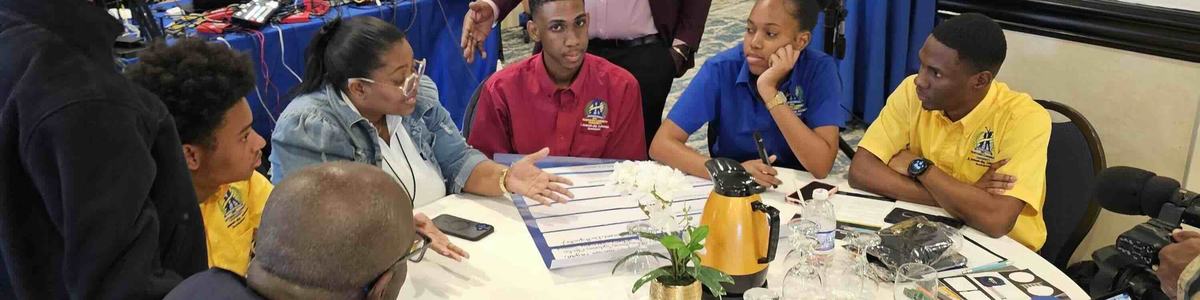
Partnering with our connectivity and Open Fibre Data Standard (OFDS) colleagues, we hosted a ‘Peering Best Practices and Measurement’ day for 50 local and regional industry, government, and academic professionals to understand their perceived networking challenges and develop local solutions.
Disasters, Data, Diversity
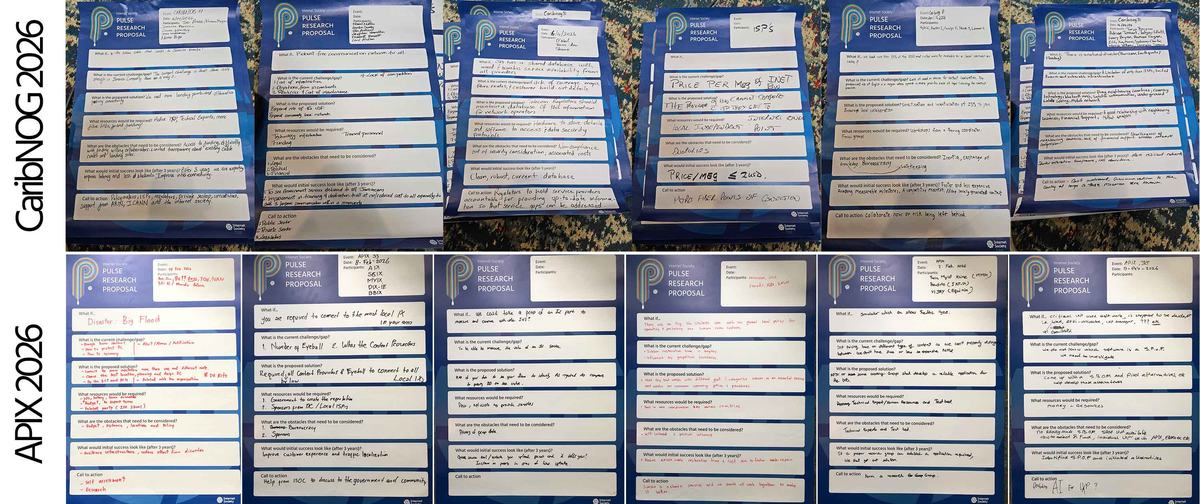
After providing them with context from international measurement and connectivity projects, we asked participants to work in groups to identify the challenges of connecting people in the Caribbean and to propose a solution with measurable components to track the impact of their strategy (Table 1).
| Challenges | Solutions |
|---|---|
|
|
Interestingly, many of these themes (Table 2) were also noted during a similar session we held during the Asia Pacific Internet Exchange (APIX) meeting at APRICOT 2026, held in Jakarta, Indonesia, in February. Specifically, the need for
- Improved planning for and mitigation of natural disaster damage. Both the Caribbean and the Asia Pacific region have been experiencing increases in the intensity and frequency of tropical storms that have cut off communities from major utilities, including the Internet, for months after events.
- Increased visibility of, and access to, network data. Participants across both events recognized the importance of data for decision-making and pointed to the lack of open data or mechanisms to measure and make available key metrics for terrestrial, subsea, and electrical infrastructure, as well as Internet and IXP performance.
- Greater diversity across ISP markets, subsea cables, and critical software. As of May 2025, four out of five countries globally have poor to very poor ISP market competition ratings. Likewise, there is a growing concentration of companies overseeing subsea cable deployment, maintenance, and ownership.
In relation to the latter, one group at the APIX session noted a lack of alternatives to and/or support for BIRD, IXP Manager, and OpenBGPd, all of which have become critical to IXP functionality.
| Challenges | Solutions |
|---|---|
|
|
Informing and Supporting Future Research and Development
Our plan is to run this exercise at other NOG and peering events during 2026, and to collate and analyze the responses during our Pulse Research Week later in the year, alongside our research and data partners, in an effort to tailor our work to regional needs and identify local partners to help with our efforts.
We also encourage groups that have been involved in these sessions or inspired by the results shared here to apply for the Internet Society Foundation’s Sustainable Peering Infrastructure (SPI) Grant Program to increase the resilience of the peering and its supporting ecosystem. It’s worth noting that, as part of our 2030 Strategy, the grant program will focus on projects in Least Developed Countries (LDCs) and Small Island Developing States (SIDS).
Email us at [email protected] if you’re interested in hosting, partnering, sponsoring, or presenting opportunities at our future PIMF events. And stay tuned to the Pulse events page for upcoming events.