

Malaysia's Crowd-sourced Internet Measurement Platform

In short
- Indigenous Internet measurement systems are critical for assessing and validating the current strengths and weaknesses of local Internet connected networks.
- Researchers at the University of Technology, Sarawak, have developed such a platform, which relies on crowd-sourced and IoT-derived network performance data.
- The platform can assist consumers, regulators and policy makers to contribute to and better plan the Internet's development in Malaysia.
Malaysia, particularly the rural areas of Sarawak, faces significant Internet quality challenges due to its geographical and infrastructural constraints. Vast rainforests and mountainous terrains surrounding rural communities delay the deployment and maintenance of telecommunication infrastructure, leading to poor mobile network coverage and limited fixed broadband Internet access.
This has not stopped the Malaysian government from setting an ambitious goal of 100% 4G coverage by the end of 2025. While some reports claim that Malaysia is closing in on this goal, the validity of these claims is often questioned.
This issue is not unique to Malaysia. At the 2022 Asia Pacific regional Internet Governance Forum (APrIGF), panelists from Malaysia, New Zealand, Papua New Guinea, and Sri Lanka disputed a global mobile industry association's claim that 96% mobile broadband coverage in the Asia Pacific region was "overestimated" due to known "unconnected" and "disconnected" populations.
Academics suggest that macro-statistics often obscure the in-country reality of connectivity, as well as quality of service (QoS) and quality of experience (QoE), which have become equally important metrics when measuring the performance and overall resilience of the Internet at a country and regional level.
- Consumers lack reliable, community-wide data to compare providers, as official reports are full of claims but often don't reflect actual user experiences.
- Due to a lack of accurate performance data, policymakers struggle to measure and ensure the real-world effectiveness of government-supported projects in rural areas.
- Regulators face difficulties obtaining timely and reliable information during infrastructure outages, especially in remote regions where users cannot report problems.
Developing Indigenous Measurement Tools of Malaysia
With the financial support of the APNIC Foundation, my colleagues and I at the University of Technology, Sarawak, have developed a platform to measure and publicly share data on network performance in Malaysia.
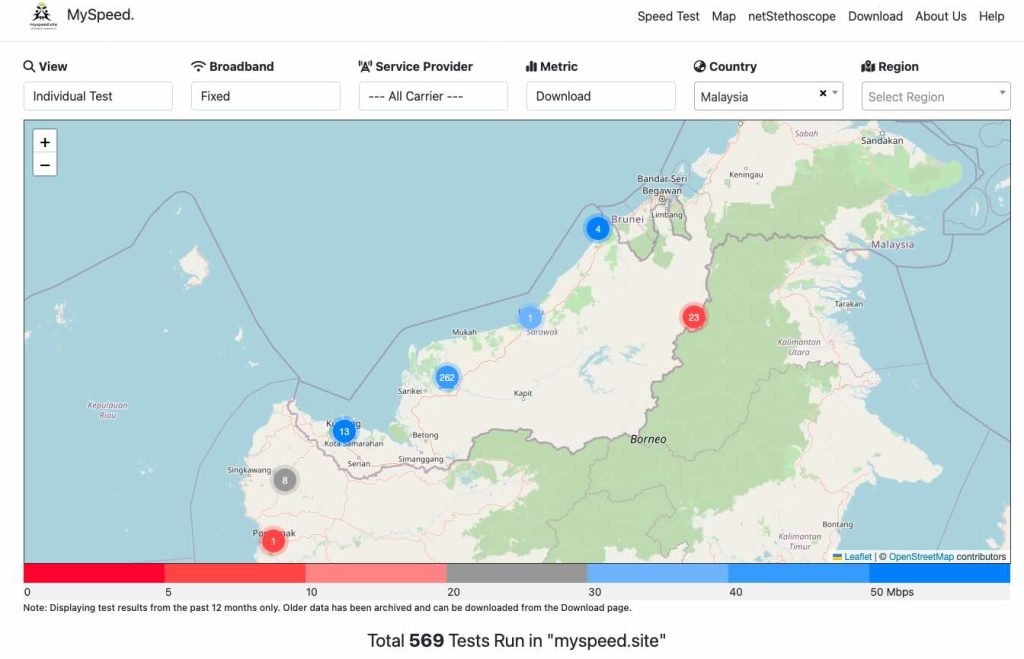
The platform uses two tools that combine IoT-based technologies and crowdsourced data:
- Myspeed.site integrates Geographical Information System (GIS) data for comprehensive network performance analysis across Australia, India, Indonesia, Malaysia, and Pakistan.
- netStethoscope is a Raspberry Pi module that continuously pings myspeed.site servers from specific locations, providing real-time network status data. This proactive monitoring capability is crucial in Malaysia, where over half of its cellphone towers, particularly in Sarawak, are 'naked telecommunications towers' lacking the required monitoring equipment.
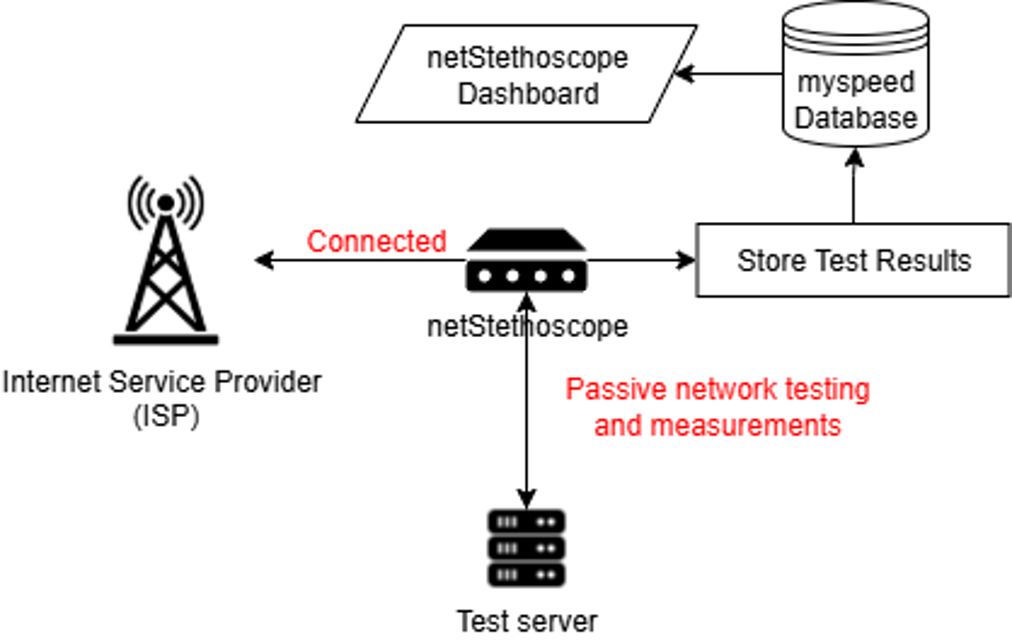
This community-driven assessment of Internet quality allows:
- Regulators, such as the Sarawak Multimedia Authority, to monitor locations remotely without depending on private operators or industry association reports.
- Consumers to monitor the performance of and make informed decisions about which mobile and Internet Service Provider to choose.
- Policy makers to make decisions more effectively on where to spend public money to improve connectivity.
Connecting the unconnected and increasing the performance of the connected requires us all to know the current situation and monitor its development accurately.
Contributors: Brandon Chong Kian Hua
Tariq Zaman is a Professor at the School of Computing and Creative Media, University of Technology Sarawak, Malaysia. His research and development interests focus on community-based co-design technologies, particularly in collaboration with marginalized Indigenous communities.
Photo by Pangalau Via Wikimedia Commons
