
EnergySHR: A Platform for Open-Source Data about Energy Transition Infrastructure, and People

The global energy transition—shifting from fossil fuels to renewable energy—is deeply intertwined with the resilience of electrical grids. As societies become increasingly dependent on digital infrastructure, the stability of the grid has a direct impact on the reliability of the Internet and the operation of data centers. To make informed decisions about infrastructure planning, energy policy, and digital resilience, decision-makers need access to transparent, open-source data.
EnergySHR is a new platform designed to support researchers, industry partners, NGOs, and grid managers in sharing, publishing, and discovering datasets, models, simulations, and algorithms related to energy systems across the broad spectrum of energy transition research.
To simplify project development and present evidence for policy and decision-making at various levels, EnergySHR has embedded the FAIR principles of open data—findable, accessible, interoperable, and reusable—in its design.
Metadata Makes Datasets Easy to Find
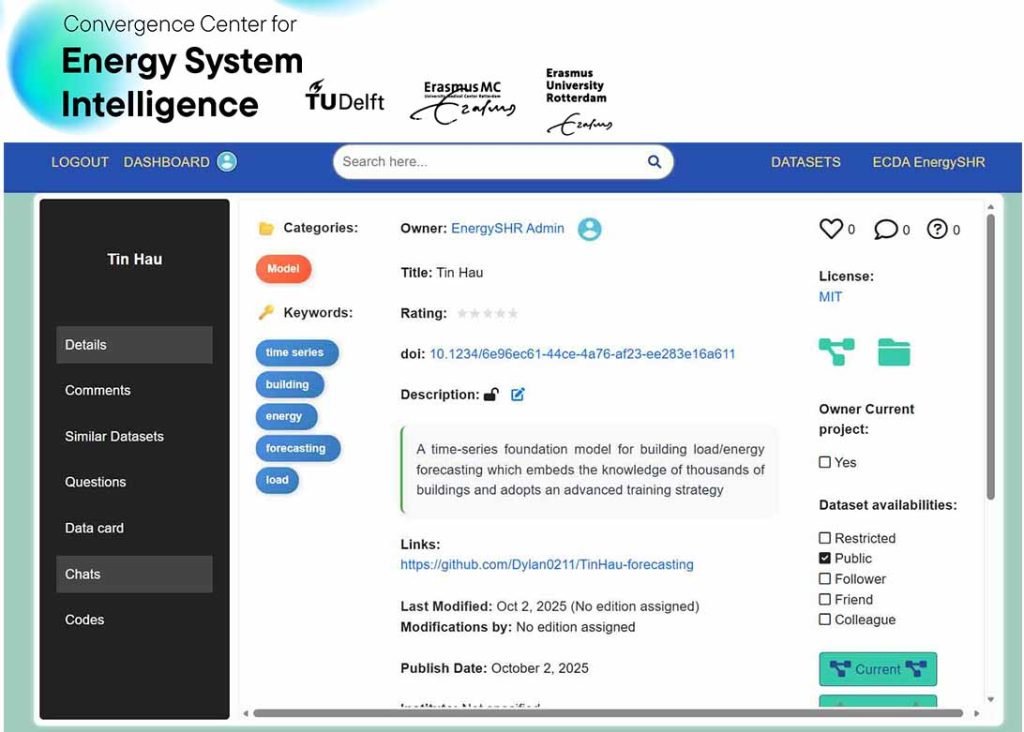
EnergySHR has incorporated features like keywords and data categories that make searching, managing, and updating datasets user-friendly. Data can be described in as much or as little detail as needed to define the use and application
Data can also be connected to databases such as MySQL, Kafka, Snowflake, and others.
Additionally, datasets can be grouped into projects, which encompass a range of datasets that can be shared with others. Each new dataset is also assigned a DOI to facilitate easy sharing and citation of the data. Datasets can also be reviewed, rated, and archived.
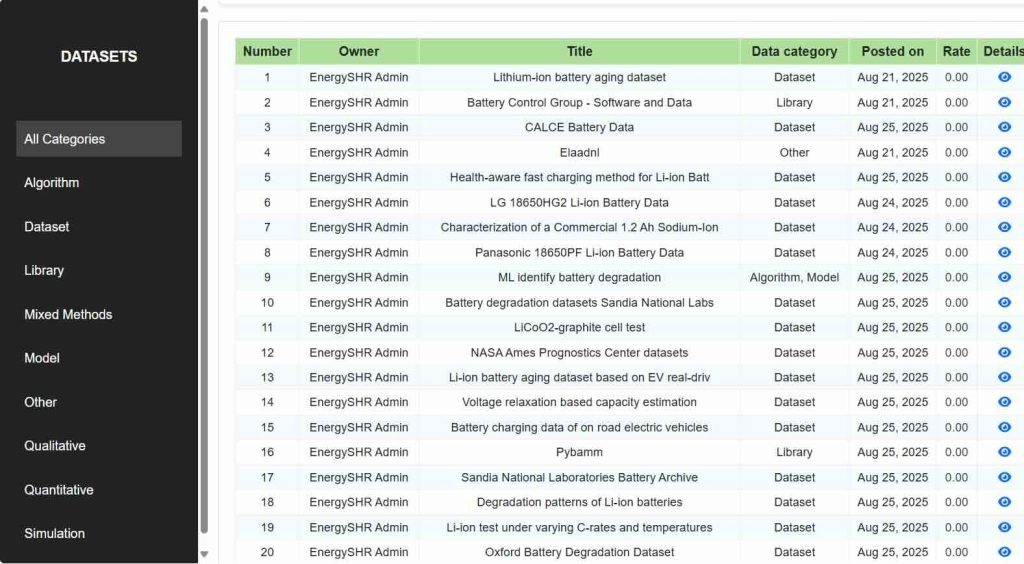
Data is Open, Free, and Universally Implementable
The EnergySHR platform is free to use, and dataset owners can identify how a dataset, model, algorithm, simulation, or other type of data can be shared: publicly, with friends and colleagues, or kept private and restricted.
Dataset owners can also specify transform their data to specific metadata standards, including Schema.org, Research Object-Crate, Dublin Core, DataCite, and Croissant.
These interoperability features ease the reusability of data in the platform and beyond.
Clear Licensing Enables Responsible Reuse
Reusable data is primarily identified through licensing. Users can:
- Identify and assign different license types to datasets for publicly shared datasets.
- Upload new versions of datasets while still retaining old ones in the same location.
- Archive datasets, projects, and connections.
These parts of the data lifecycle ensure that information being shared and accessed on the platform is current.
Join the Community
At CESI, we believe in building an inclusive community around data in the energy transition. This involves engaging with various stakeholder groups that encompass a range of data types across multiple areas.
We also aim to continue evolving the EnergySHR platform to address current and future needs, such as digital twins, making real-time data sharable, and creating spaces that respect data ownership for marginalized and indigenous communities, within a framework called the CARE principles.
Finally, we are building features to further facilitate ease of use, such as information pop-ups about licenses and data types, creating tutorials based on user feedback, and developing Collections that will enable labs and research groups to co-manage datasets over time—ideal for longitudinal studies on grid resilience and digital infrastructure.
If you're interested in contributing data, collaborating on projects, or seeing a demo of EnergySHR, we’d love to hear from you. Please email the Center for Energy System Intelligence at [email protected] or [email protected].
EnergySHR is developed by the Center for Energy System Intelligence (CESI), a Convergence collaboration between TU Delft and Erasmus University Rotterdam, and built by the Erasmus Center for Data Analytics.
Alicia Takaoka is a Postdoctoral Researcher at Erasmus University Rotterdam.
The views expressed by the authors of this blog are their own and do not necessarily reflect the views of the Internet Society.
Image by PublicDomainPictures from Pixabay