
Apagón nacional
Nacional excepto región kurda
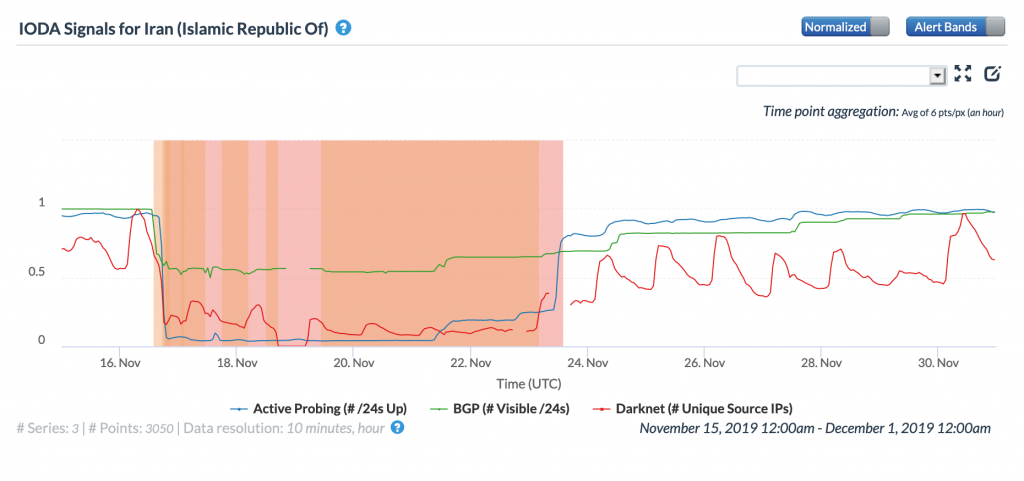
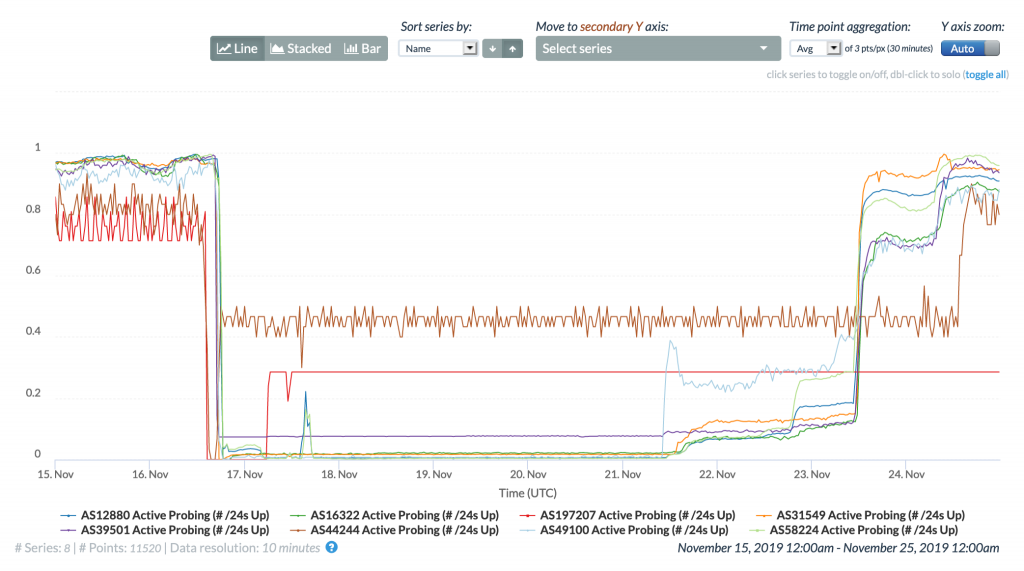
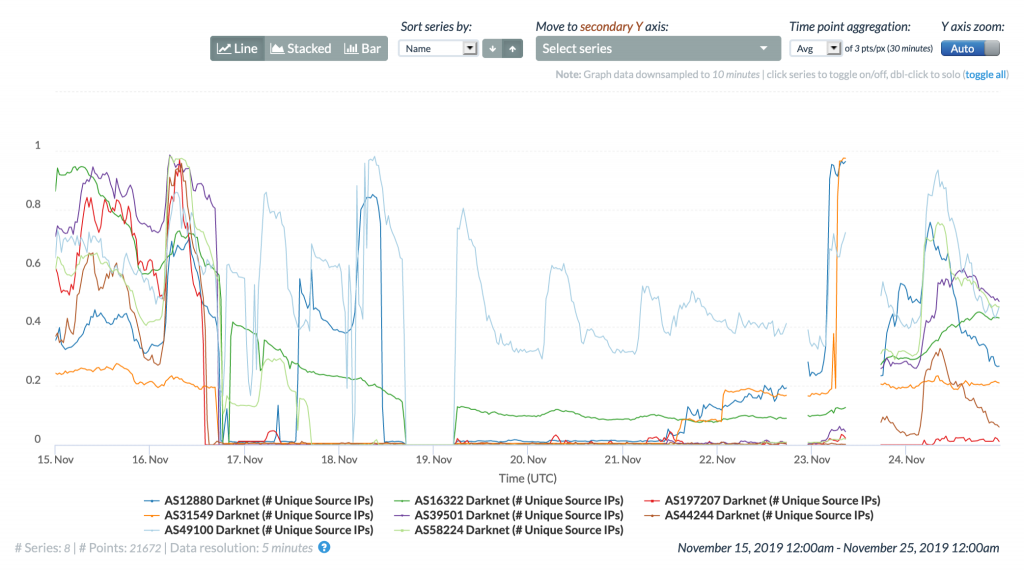
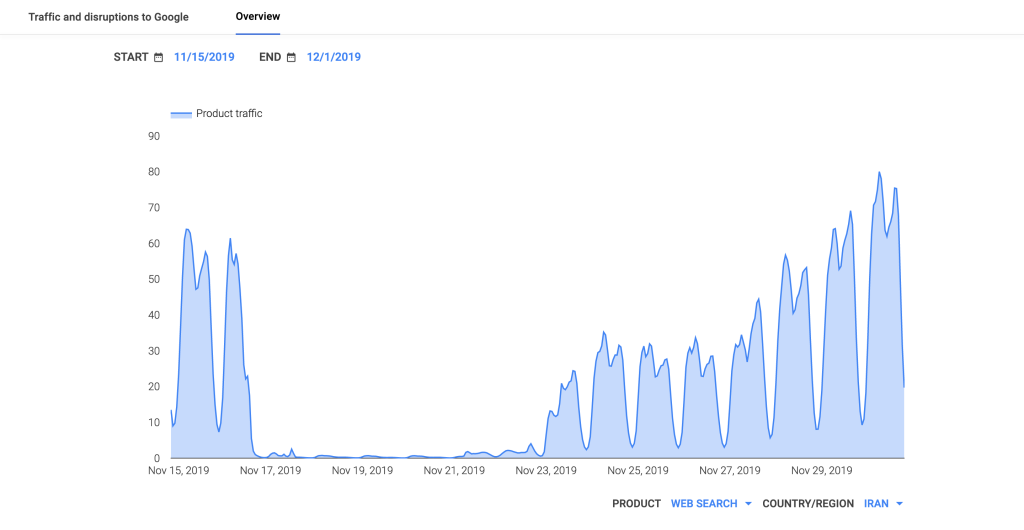
On November 16, 2019, the Iranian government shut down the Internet following deadly protests over fuel price hikes. The five-day blackout derailed daily life, and resulted in widespread disruption of online services, rendering access to healthcare and online education sources unavailable for millions of citizens. While Iranians are no strangers to shutdowns, this one was different to previous incidents, and far more sophistocated. Rather than throttling (slowing of connectivity) and blocking access to certain websites, services and apps, the entire country was taken completely offline, making it difficult use circumvention techniques. "Iran’s ability to shutdown the Internet is the culmination of policies, technological developments and centralised control", says Mahsa Alimardani, one of the authors of the Article19 research and an academic at the Oxford Internet Institute. “A lot of the incentive to shut down the Internet was to shut down communication channels that were seen to be facilitating a lot of this mobilisation,” Alimardani says (source: Wired). Internet shutdowns during protests or civil unrest impact the ability of citizens to get accurate information from government sources when they need it most. It also becomes harder for citizens to contact family members and friends in other parts of the country, or in other countries.
- Duración total 8 days
 Irán
Irán
- Población
- 91 567 738
Freedom House clasifica la libertad en Internet como No libre
Impacto local
El 16 de noviembre de 2019, el gobierno iraní cerró Internet tras las mortíferas protestas por la subida del precio del combustible. El apagón, que duró cinco días, desbarató la vida cotidiana y provocó una interrupción generalizada de los servicios en línea, lo que impidió a millones de ciudadanos acceder a la sanidad y a las fuentes de educación en línea. Aunque los iraníes no son ajenos a los apagones, éste fue diferente a los incidentes anteriores, y mucho más sofisticado. En lugar de estrangular (ralentizar la conectividad) y bloquear el acceso a determinados sitios web, servicios y aplicaciones, se desconectó por completo todo el país, lo que dificultó el uso de técnicas de elusión. "La capacidad de Irán para cerrar Internet es la culminación de políticas, avances tecnológicos y control centralizado", afirma Mahsa Alimardani, una de las autoras de la investigación de Article19 y académica del Oxford Internet Institute. "Gran parte del incentivo para cerrar Internet fue cerrar los canales de comunicación que se consideraba que facilitaban gran parte de esta movilización", afirma Alimardani (fuente: Wired). Los cierres de Internet durante las protestas o los disturbios civiles afectan a la capacidad de los ciudadanos para obtener información precisa de fuentes gubernamentales cuando más la necesitan. También se hace más difícil para los ciudadanos ponerse en contacto con familiares y amigos en otras partes del país, o en otros países.
Otra información complementaria
INFORME DE TRANSPARENCIA DE GOOGLE
Redes sociales
'Un joven artista que pidió que no se utilizara su nombre visitó una farmacia cerca de la plaza Haft-e-Tir el 16 de noviembre para surtir una receta para su hermana. Contó a este reportero que el farmacéutico le dijo que no podía surtir la receta porque "no puedo registrar sus recetas en el sitio web de la aseguradora. Vuelva más tarde". El joven artista salió de la farmacia llorando. Finalmente pudo encontrar el medicamento, pero tuvo que pagar un suplemento". - Fuente: Consejo Atlántico 'Además de las startups, las industrias que dependen de socios y proveedores extranjeros se vieron muy afectadas por el corte de Internet. Una mujer iraní que trabaja para una empresa automovilística local y pidió que no se utilizara su nombre, dijo en una entrevista: "Solíamos chatear constantemente con nuestros socios chinos a través de WeChat [una aplicación de mensajería china]. Nuestros ingenieros confían en los consejos de sus homólogos chinos. Al estar aislados de Internet, nuestras operaciones se han visto interrumpidas"'. - Fuente: Consejo Atlántico 'El periódico de Teherán Hamshahri informó a de que muchas pequeñas empresas se habrían visto abocadas a la quiebra si no se hubieran restablecido los servicios normales de comunicación. Nazanin Daneshvar, directora general del sitio web Takhfifan, declaró a Hamshahri: "Hemos perdido el 80% de nuestras ventas... [Si no se restablece la conexión a Internet] nos veremos obligados a cerrar nuestro negocio." ' Fuente: Consejo Atlántico
Cobertura mediática
'A young artist who asked that his name not be used visited a drugstore near Haft-e-Tir Square on November 16 to fill a prescription for his sister. He told this reporter that the pharmacist said he couldn’t fill the prescription because “I can’t register your prescriptions on the insurer’s website. Come back later.” The young artist left the pharmacy in tears. He was eventually able to find the medication but had to pay extra.' - Source: Atlantic Council 'In addition to startups, industries that rely on foreign partners and suppliers were hit hard by the Internet outage. An Iranian woman who works for a local automotive company and asked that her name not be used, said in an interview: “We used to chat with our Chinese partners constantly via WeChat [a Chinese messaging app]. Our engineers rely on their Chinese counterparts’ counsel. Being cut off from the Internet, our operations have been disrupted.”' - Source: Atlantic Council 'The Tehran newspaper Hamshahri reported that many small firms would have been pushed into bankruptcy if normal communication services had not been restored. Nazanin Daneshvar, CEO of the website Takhfifan told Hamshahri, “We have lost 80 percent of our sales… [If the internet connection is not restored] we’ll be forced to close down our business.” ' Source: Atlantic Council